


By Helleniscope’s Editorial Team
As Russia, China, and Iran are closing ranks and intensifying their cooperation, taking advantage of their superiority (ahead 2-3 generations) in hypersonic missiles it is clear that we are now amid a global realignment, where the combined forces of Russia, China, Iran, and BRICS are rapidly cornering the U.S.–EU–Israel alliance. The only card left for the West may be its most dangerous: nuclear escalation.
The following 12 developments expose the contours of a global checkmate against the combined West — or, alternatively, the beginnings openly of World War III.
The 12 Strategic Flashpoints
1. Iran fortified: S‑400 expands from Bushehr to Isfahan
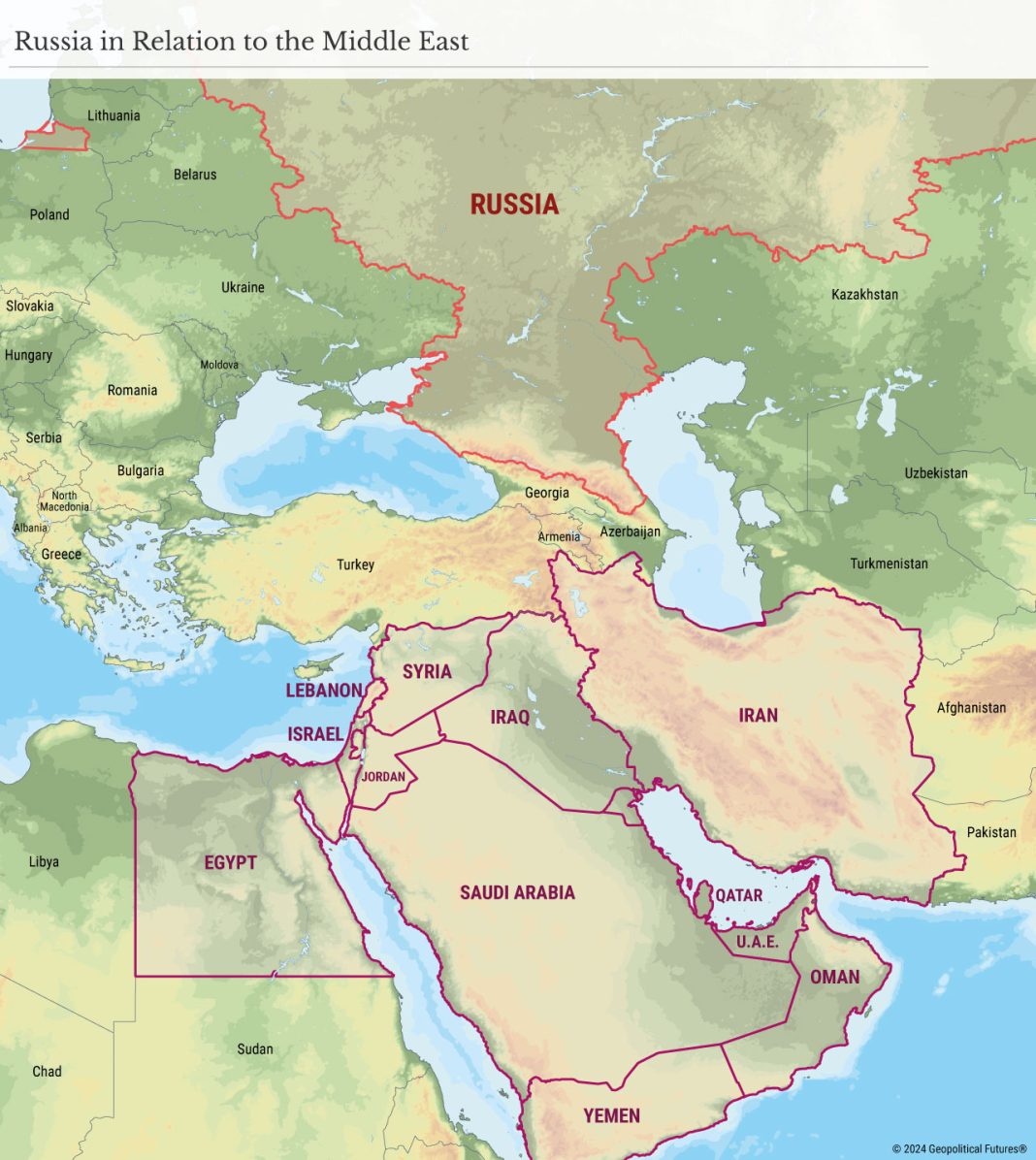
Russia had long stationed an S‑400 battery to protect its nuclear power plant in Bushehr, where over 250 Russian personnel work. But now, a second S‑400 system has been deployed near Isfahan, shielding Iran’s key uranium enrichment sites. Iranian airspace over its nuclear heartland is now effectively closed to Israeli or U.S. air raids.
2. Iran devastates Israel and U.S. radar base with hypersonics
This is no longer hypothetical.
Over 40% of Tel Aviv is destroyed: military bases, research centers, and port facilities lie in ruins.
Iran’s Fattah hypersonic missiles disabled Israel’s famed air defenses.
A single missile strike on Al-Udeid Air Base in Doha completely destroyed its radar dome and paralyzed U.S. surveillance across the Gulf.
3. Russia advances: Pokrovsk is nearly surrounded
After the fall of Chasiv Yar, Russian forces continue sweeping eastward. The strategic hub of Pokrovsk is the next domino. Ukraine is stretched thin, with its Western-supplied systems either destroyed or overwhelmed. Russia will likely proceed to occupy Odessa (100% Russophone) and later the rest of Eastern Ukraine. Russia has no intention of occupying Western Ukraine around Lviv: this is a formerly Polish territory, while there are Hungarian and Romanian minorities living there.
4. Russia lifts all missile restrictions near NATO
Moscow formally ended its moratorium on short- and intermediate-range missile deployments. Russian hypersonics and cruise missiles are now eligible for placement in Belarus, Kaliningrad, Syria—or even Cuba. With a range from 350 miles to 3,500 miles these missiles can hit any western major city.
5. U.S. deploys tactical nukes to the U.K.
In a Cold War throwback, B61-12 tactical nuclear bombs have been deployed to RAF Lakenheath. The U.K. also received F-35A fighters capable of delivering them. It’s the first time in nearly two decades that U.S. nukes are stationed in Britain.
6. U.S. General threatens Kaliningrad
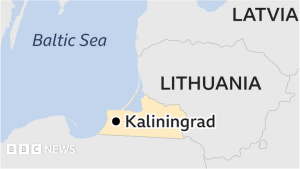
A senior U.S. general publicly declared that Kaliningrad—Russia’s Baltic fortress—could be targeted in any escalation. This marks a shift from deterrence to direct provocation.
7. Trump–von der Leyen deal masks military planning
Under the guise of diplomacy, leaked reports suggest a quiet pact between Trump’s transition team and EU President Ursula von der Leyen, laying the groundwork for coordinated economic and military actions against Russia.
8. Austria flirts with NATO
Breaking 80 years of neutrality, Austria’s Foreign Minister has signaled openness to joining NATO. This would end Austria’s long-standing buffer status between East and West—an alarming prospect for regional stability.
9. Israel openly joins Ukraine war
In a dramatic shift, Israel’s Foreign Minister visited Kyiv, establishing direct military and cyber cooperation with Ukraine – while up to now it held a very neutral position. Israeli arms and AI defense systems are expected to flow into the conflict zone, possibly triggering Russian retaliation via Syria or the Caucasus. As we saw, Russia already “locked” Iran’s air space with its S-400 missiles.
10. Tensions explode in Nakhchivan corridor
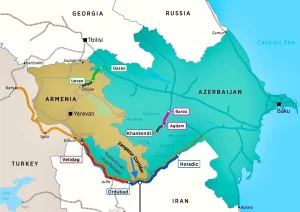
Turkey and Azerbaijan are pressuring Armenia through the Nakhchivan corridor, bypassing Armenian sovereignty. Israel, deeply entrenched in Azerbaijan, is believed to be using the region to destabilize Iran’s northern border and threaten Russia’s southern flank.
11. Armenia in crisis as Soros-backed government pushes NATO
PM Nikol Pashinyan, supported by Western NGOs, is pushing Armenia toward NATO alignment. Meanwhile, the Armenian Apostolic Church and much of the public resist. Russia maintains its Erebuni Air Base near Yerevan, and could intervene.
12. BRICS defy the West: economic war escalates
At the July BRICS Summit and later up to today, India, China, and Brazil rejected U.S. demands:
India refused to cut Russian oil or buy F-35s.
Brazil reaffirmed support for BRICS financial independence.
China dismissed EU delegations, stating that if the war expands, it will fight on Russia’s side.
Update: Russia’s “Oreshnik” hypersonic missiles enter serial production
On August 3, Russia confirmed that its Oreshnik missiles—capable of Mach 9 speeds, evasive maneuvering, and nuclear payloads—are now in full-scale production. These weapons render NATO’s missile defense systems nearly useless.
Final Thoughts
This is a moment of historic gravity. The Western alliance is outmaneuvered militarily, cornered diplomatically, and discredited economically. Its only remaining card is escalation—possibly nuclear. Meanwhile, the Global South has consolidated around real sovereignty, technological parity, and economic independence.
The coming months will reveal whether we enter a new multipolar peace—or plunge into a global war that future generations may not survive.
August 4, 2025, n.stamatakis@aol.com www.helleniscope.com
DISCLAIMER: The views and statements expressed in this article constitute constitutionally protected opinions of this author.
TO SUPPORT HELLENISCOPE OR BECOME A SUBSCRIBER, LINK HERE!!
Sources & Citations
S-400 in Iran: Military Watch Magazine
Iran missile strikes on Israel and Doha: AP News
Russian advance in Ukraine: SIPRI Yearbook 2025
Russia missile restrictions lifted: Reuters
U.S. nukes to U.K.: The Guardian
Kaliningrad threat: Newsweek
Austria–NATO signals: Kyiv Independent
Israel–Ukraine cooperation: X (Twitter)
BRICS economic realignment: Chatham House
Oreshnik hypersonics production: AP News














Thank you for a sterling update as to where we stand. This is it. Make no mistake where we are. I appreciate the map. I was not aware that Trl Aviv was 40 percent destroyed. Prayers for all.
In this mess may our ancestral Greece be safe. That will be best achieved by Greece avoiding being militarily involved as much as possible and seeking at least passable relations with all parties.