


ΕΑΝ ΠΡΟΤΙΜΑΤΕ ΕΛΛΗΝΙΚΑ ΠΑΤΗΣΤΕ ΤΗ ΣΗΜΑΙΑ ΣΤΟ ΚΑΤΩ ΜΕΡΟΣ ΤΗΣ ΟΘΟΝΗΣ
Shortly after the hearing, commission chair Dan Patrick announced that Prejean Boller would no longer serve on the commission, stating that the session had been diverted from its intended purpose.
By Helleniscope’s Editorial Team
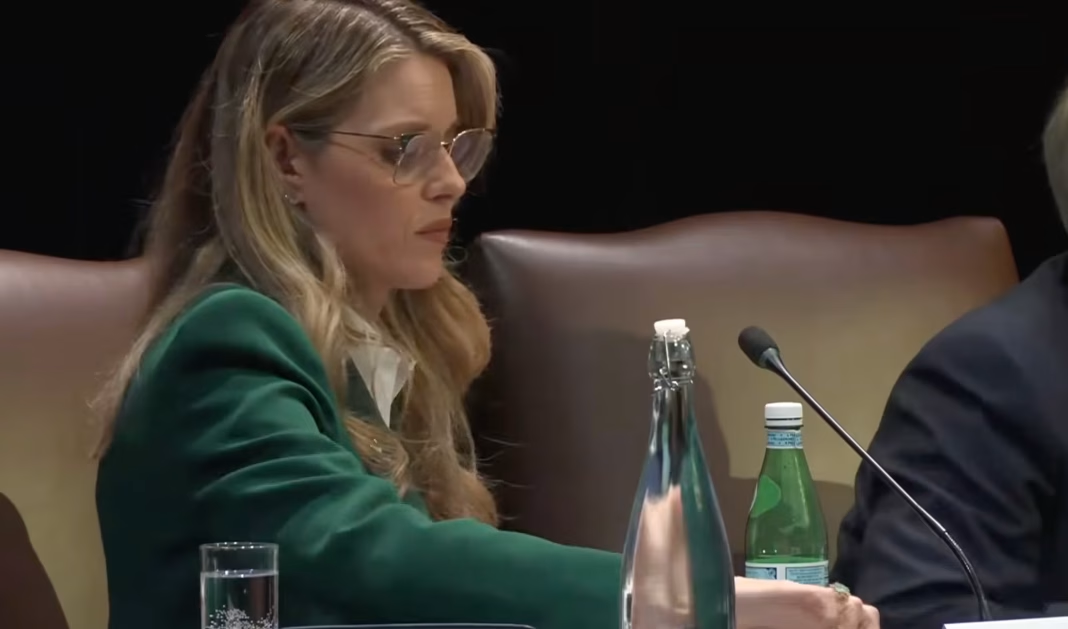
In a formal hearing room in Washington, D.C., the Religious Liberty Commission convened to address what was billed as rising antisemitism in the United States.
The commission — established under Donald Trump — includes religious leaders and political appointees tasked with advising on faith and public policy.
During the session, one commissioner, Carrie Prejean Boller, a Catholic member of the panel, took the discussion in a sharply different direction.
While she was not the chair of the commission, she became the central voice in the controversy that followed.
A Clear Anti-Zionist Position
During questioning, Prejean Boller stated clearly that she does not support Zionism as a political ideology. She raised the question of whether Catholics must align with political Zionism in order to avoid accusations of antisemitism.
In her remarks, she drew a distinction between:
Antisemitism — hostility toward Jewish people
Zionism — support for the modern State of Israel as a political project
She argued that opposing Zionism or criticizing Israeli government policy should not automatically be equated with antisemitism.
Her framing was direct and unambiguous. She positioned herself as anti-Zionist while insisting that this stance does not imply hostility toward Jewish people.
The statement shifted the tone of the hearing immediately.
The Reaction in the Room
Other commissioners and invited speakers pushed back, arguing that in contemporary practice, anti-Zionism often functions as a vehicle for antisemitism — particularly when it denies Jewish self-determination.
The exchange was tense but controlled. Voices did not erupt into chaos, but the disagreement was unmistakable. Observers noted visible discomfort among panel members as the debate moved from general concerns about antisemitism into a philosophical dispute over Israel and Jewish national identity.
The Aftermath
Shortly after the hearing, commission chair Dan Patrick announced that Prejean Boller would no longer serve on the commission, stating that the session had been diverted from its intended purpose.
Supporters said she was raising legitimate theological and constitutional concerns. Critics said the hearing on antisemitism was not the appropriate venue to advance an anti-Zionist position.
Why It Resonates
This dispute reflects a broader national debate:
Is anti-Zionism inherently antisemitic?
Can criticism of Israel be cleanly separated from prejudice against Jews?
How should religious commissions navigate geopolitical ideology?
What unfolded in Washington was not merely a policy disagreement. It was a visible fault line — between interfaith solidarity and political theology — playing out in real time under federal lights.















The US Government spent many years opposing Apartheid practices in South Africa (while balancing the DeBoers’ lobby requests to allow diamonds in the market anyway)…
More recently, the US Government has raised opposition to “land grab” practices in Zimbabwe and South Africa, targeting “minority owners”…
The US Government in recent history has also expressed opposition to genocidal massacres (or displacements) in Rwanda, Sudan, Tibet, and elsewhere
And yet somehow a mere discussion about if what actually transpires in Israel on any given day is comparable to any of the above examples not only remains a “taboo subject” on US Government panels, but the Government removes people from their positions when they dare to open the discussion…
Interesting indeed, but this raises the question of if those in Government who swore to uphold the Constitution truly believe in protecting any dissenter’s rights under the First Amendment or not…did they lie when they swore to uphold the Constitution? If they did, aren’t they unfit for office? That’s the real disturbing story in this example…the government will not allow “another perspective” on certain topics in the “land of free speech”, and will resort to penalizing the “dissenters” any way it can…
Criticism of Israel can ABSOLUTELY be separated from prejudice against Jews. Criticism of Hitler and Naziism does not mean prejudice against Germans; not does criticism of Communism mean prejudice against Russians, Cubans and Chinese people. Furthermore, when so many Jewish people themselves are opposed to the activities of the State of Israel for the “benefit” and “expansion” of the State of Israel, how can these Jewish people be prejudiced against themselves? To say that Anti-Zionism is the same as Antisemitism is political manipulation and pure hogwash. Race is NOT attached to ideology, but politicians have a way of speaking out of both corners of their mouths, or taking the obvious and throwing it into murky waters.