

ΕΑΝ ΠΡΟΤΙΜΑΤΕ ΕΛΛΗΝΙΚΑ ΠΑΤΗΣΤΕ ΤΗ ΣΗΜΑΙΑ ΣΤΟ ΚΑΤΩ ΜΕΡΟΣ ΤΗΣ ΟΘΟΝΗΣ
Greek-operated tankers are being pulled into the Black Sea drone war as attacks around the CPC oil corridor increasingly threaten shipping, Western energy interests and the global petroleum trade. If Zelensky attacks American interests in the Black Sea, when will Washington wake up?
By Helleniscope’s Editorial Team
As attacks spread through the Black Sea oil lanes, Greek-operated tankers and Western energy interests are being dragged into a maritime war whose consequences now extend far beyond Russia and Ukraine.
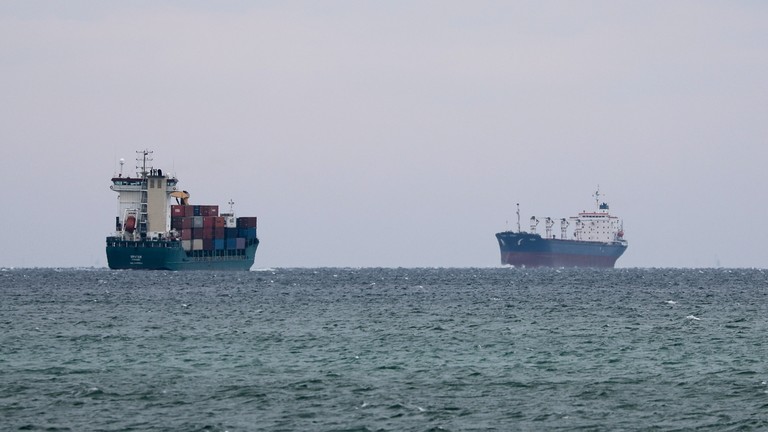
Bloomberg reports that the Greek-run Suezmax tanker Skiros was attacked in the Black Sea after loading Russian-origin crude at the Caspian Pipeline Consortium terminal near Novorossiysk, marking the latest escalation around one of the world’s most important oil-export corridors. The Athens-managed vessel, capable of carrying about one million barrels, suffered no reported casualties or pollution, although the incident adds another Greek commercial ship to a growing list of vessels endangered by the expanding Black Sea drone war.
Read the Bloomberg report here
The significance goes well beyond one tanker, because the CPC terminal primarily handles Kazakh rather than Russian oil and recently accounted for nearly 2% of global crude supplies. Its ownership also includes American giants Chevron and ExxonMobil, meaning that attacks around Novorossiysk increasingly threaten not only Russian petroleum revenues but Kazakhstan’s exports, Western corporate interests and the international energy market.
Greek shipping has already been caught in this widening conflict. Earlier attacks around the CPC terminal disrupted loading operations so severely that Kazakh oilfields were forced to reduce production, while shipowners became increasingly reluctant to expose vessels and crews to a region where commercial tankers could suddenly find themselves inside a combat zone.
The situation became serious enough that Vice President JD Vance personally chastised Zelensky and demanded an end to attacks on tankers and CPC-related infrastructure, after Washington concluded that the escalation was threatening non-Russian shipping and important American energy interests. Ukraine subsequently agreed to refrain from attacking CPC infrastructure and certain non-Russian vessels, although ships carrying Russian cargo were excluded from that protection.
That exception matters because Bloomberg reports that Skiros was indeed carrying Russian-origin crude, even though it loaded at a terminal overwhelmingly associated with Kazakh exports. Bloomberg has not identified who attacked Skiros, but the incident shows how quickly the distinction between striking Russia and endangering international merchant shipping is disappearing in the Black Sea.
For Greece, this should be a matter of national concern, because Greek-controlled vessels transport Russian, Kazakh, American, Arab and European cargoes throughout the world, and a Greek merchant tanker does not become a warship merely because politicians somewhere decide that the oil inside its tanks belongs to the wrong country.
Once civilian vessels can be targeted according to the origin of their cargo, the consequences extend far beyond Moscow or Kiev, creating enormous risks for crews, insurers, energy markets and especially Greece, whose global influence rests heavily upon the strength of its merchant fleet.
Washington apparently discovered its red line when the escalation began threatening American energy companies and global oil supplies. Athens should be asking where its own red line lies when Greek-managed ships are sailing through the crosshairs.
The Black Sea conflict is no longer confined to trenches and military installations; it is increasingly spilling into the arteries of international commerce, and Greek shipping is now directly exposed to the consequences.
August 18, 2026, www.helleniscope.com, n.stamatakis@aol.com
DISCLAIMER: The views and statements expressed in this article constitute constitutionally protected opinions of this author.
















And the Greek-American community here in the U.S. is going to “honor” this idiot at a “Beacon of Hope” dinner hosted by the St. Nicholas Shrine? Something’s wrong here.
The Greek-American elites will honor this “idiot” because they too, are idiots.