


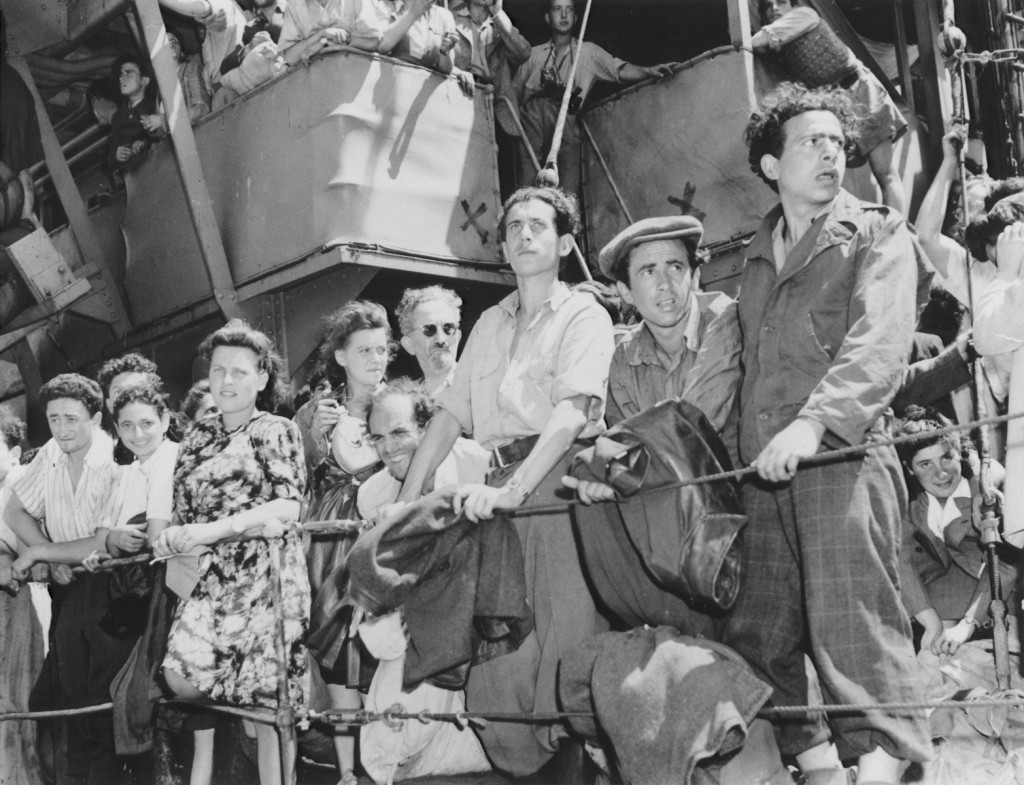
PHOTO: Refugees crowd the rail of the Aliyah Bet (“illegal” immigration) ship Josiah Wedgewood, anchored at the Haifa port. British soldiers transported the passengers to the Athlit internment center. Palestine, June 27, 1946. Among them, two corpses of slain by the British (!!) Jewish refugees…
ΕΑΝ ΠΡΟΤΙΜΑΤΕ ΕΛΛΗΝΙΚΑ ΠΑΤΗΣΤΕ ΤΗ ΣΗΜΑΙΑ ΣΤΟ ΚΑΤΩ ΜΕΡΟΣ ΤΗΣ ΟΘΟΝΗΣ
By Nick Stamatakis
Many Greeks and Greek-Americans, including yours truly, can tell you family stories of many Greeks finding shelter in Palestine and particularly in Gaza during the years of the German occupation (1941-44). In my case, my family, which originated from the islands, shared a prevalent experience… So when I recently watched the following video, I knew instantly it was telling the truth…
“Before Palestine became the world’s synonym for exile, it was itself a land that offered refuge.”
Amid today’s turbulence, few recall that the soil of Palestine—long before 1948, long before its own people became displaced and today “genocided” —once offered sanctuary to others. Between 1940 and 1945, Greeks escaping Axis famine, Armenians rebuilding lives after genocide, and Jewish survivors of the Holocaust all found shelter—however brief or imperfect—within Palestine’s borders. It is a chapter of shared suffering and unexpected solidarity that deserves to be remembered.
The Greeks in Gaza and Haifa
When German and Italian forces occupied Greece in 1941, tens of thousands fled starvation and persecution. Allied evacuation missions ferried many across the Aegean to the Middle East. Records from the Middle East Relief and Refugee Administration (MERRA) and later UNRRA show refugee camps for Greek civilians in Palestine—notably Haifa and Nuseirat in Gaza.
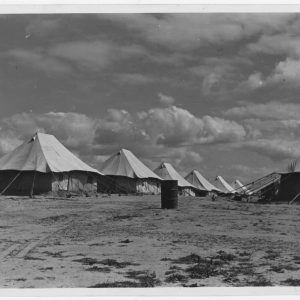
A UNRRA photograph shows tents pitched in the Gaza sands, captioned simply: “UNRRA’s biggest camp for Greek refugees.”
There, Greek families received food, medical care, and education.
Some joined Allied support units; others waited years for repatriation.
In a haunting twist of history, the same Nuseirat camp later became a Palestinian refugee camp under UNRWA, housing families displaced by the 1948 war.
Armenians: The First to Seek Refuge
Palestine’s tradition of sanctuary began decades earlier. After the Armenian Genocide of 1915, nearly 10,000 Armenians fled Ottoman persecution and rebuilt their lives in Jerusalem, Bethlehem, and Haifa. They established schools and workshops, giving birth to the Armenian Quarter of Jerusalem, still vibrant today.
By the 1940s, Armenians in Palestine were fully integrated into the Mandate economy.
The American Red Cross provided relief to Armenian families in Ramallah and Wadi Surar, proof of continuing humanitarian activity. Palestinians and Armenians shared a complex, cooperative coexistence—one community of survivors living beside another on the threshold of modern upheaval.
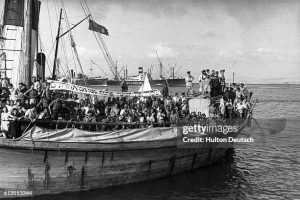 The Haviva Reik, packed with Jewish refugees, drifts near the port of Haifa after it broke down. Some of the passengers hold a banner that says: “Keep the gates open, we are not the last.” | Location: Near Haifa, Israel. (Photo by © Hulton-Deutsch Collection/CORBIS/Corbis via Getty Images)
Jewish Refugees and the Paradox of Palestine
After 1945, Jewish survivors of the Holocaust sought to reach Palestine as a final refuge.
But under the British White Paper of 1939, immigration quotas turned the land of promise into one of detention. Between 1945 and 1948, the British intercepted over 50,000 refugees, diverting them to Cyprus detention camps. Those who managed to land were often sent to Atlit, a barbed-wire compound south of Haifa.
In August 1946, the ship Henrietta Szold arrived from Greece with over 500 survivors.
They were interned immediately upon arrival. Yet earlier instances of compassion reveal another side of the story: in Hebron, 1929, Arab families sheltered Jewish neighbors from violence, saving dozens of lives. Such moments—too easily forgotten—show that humanity could cross the fiercest divides.
A Shared Geography of Exile
From Greek families in Gaza, to Armenian artisans in Jerusalem, to Jewish survivors in Atlit, the map of Palestine once traced the humanitarian crossroads of the eastern Mediterranean.
The transformation of Nuseirat—from Greek to Palestinian refugee camp—stands as a symbol of the region’s revolving doors of exile.
Yesterday’s host becomes today’s displaced. The moral duty to shelter endures longer than any border.
Long before modern politics hardened national identities, the people of this land understood something deeper: that compassion, like suffering, knows no nationality.
Editor’s Note
This essay draws upon UNRRA and UN archives, wartime refugee reports, and eyewitness accounts to recover a forgotten Mediterranean connection between Palestinians and Greek, Armenian, and Jewish refugees. It offers readers a glimpse into how the Middle East once served as a refuge for Europe’s displaced during and after World War II. It also shows that the Palestinians, Muslim or Christian, welcomed all refugees and opened their doors to them!! It is atrocious that lunatic Bibi Netanyahu wants to present them now as “amelek” (“subhumans”). This culture of hospitality among Palestinians did not suddenly disappear – it is still there, alive… When the war stops and when peace comes it will flourish again…
Citations
UN Archives / RefugeeHistory.org, “Tents at Nuseirat—UNRRA’s Biggest Camp for Greek Refugees.”
Ibrahim, “Refugee Settlement and Encampment in the Middle East and North Africa, 1860s–1940s.”
United Nations Relief and Rehabilitation Administration (UNRRA) files, 1944–45.
University of Washington (Stroum Center), “Tracing the History of Armenians in Jerusalem.”
USHMM, “Refugee Ships and British Interception in Palestine, 1945–48.”
Atlit Detention Camp Archives, Israel Antiquities Authority.
American Red Cross relief records on Armenians in Palestine, 1919–1930s.
Suggested Reading List
Refugees in the Middle East: The UNRRA Experience (1943–1949) – UN Archives
Benny Morris, The Birth of the Palestinian Refugee Problem Revisited (Cambridge UP, 2004)
Howard Adelman & Elazar Barkan, No Return, No Refuge
Bedross Der Matossian, Shattered Dreams of Revolution
Michael L. Lewis, Greek Refugees in the Middle East, 1941–1946 (War and Society Journal)
Susan Cohen, Journey to Palestine: Holocaust Survivors and British Policy in the Mandate Period
October 12, 2025, n.stamatakis@aol.com www.helleniscope.com
DISCLAIMER: The views and statements expressed in this article constitute constitutionally protected opinions of this author. This article represents the opinion of the author and shall not be interpreted as legal advice.
TO SUPPORT HELLENISCOPE OR BECOME A SUBSCRIBER, LINK HERE!!
















This was an eye opening article for me. How sad that what once was is now destroyed. I will never forgive what was done in the last few years. Thank you also for the citations.
Here is another eye opening video from 1946, when Palestine was still under British rule and the news were reporting how the “Zionist terrorists” bombed the King David Hotel in Jerusalem, killing 91 people:
https://www.britishpathe.com/asset/135855/
That was way before the terrorist group Hamas took over the area.
Let’s not forget that initially it was Netanyahu who funded Hanas in order to diminish PLO and Yasser Arafat.
And enough evidence has surfaced pointing to the fact that Israel had information about October 7, 2023, yet they allowed it to happen. They even removed the permanent guardsmen from the border with Gaza.
Irene, who took over the area in 1948? Look it up.