


ΕΑΝ ΠΡΟΤΙΜΑΤΕ ΕΛΛΗΝΙΚΑ ΠΑΤΗΣΤΕ ΤΗ ΣΗΜΑΙΑ ΣΤΟ ΚΑΤΩ ΜΕΡΟΣ ΤΗΣ ΟΘΟΝΗΣ
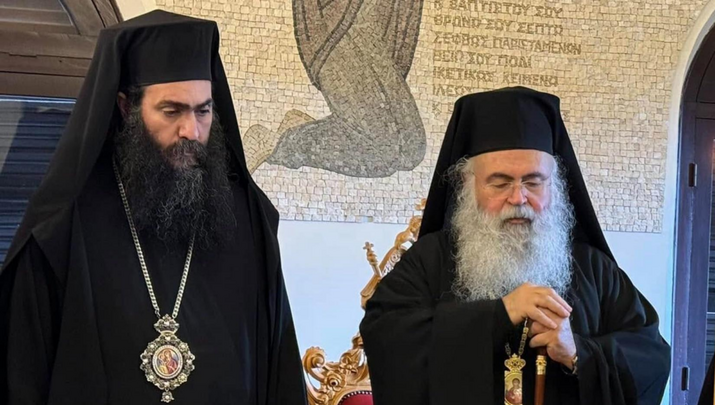
The indefinite suspension of Metropolitan Tyhikos exposes a Church leadership more focused on enforcing ideological conformity than upholding justice. When repentance is weaponized and obedience demanded without due process, the Synod forfeits moral authority—and drives the accused toward the civil courts.
By Helleniscope’s Editorial Team
What unfolded in the case of former Metropolitan Tyhikos of Paphos is no longer a disciplinary matter—it is a public unmasking of the Church of Cyprus’s institutional decay.
The turning point came when Tychikos made it clear that he would seek justice in the civil courts. That decision did not emerge from defiance, but from exhaustion: exhaustion with a process in which the outcome appeared predetermined, the accusations recycled, and the right to a meaningful defense systematically denied.
Instead of reflecting on why a hierarch would feel compelled to step outside the ecclesiastical framework, the Holy Synod chose escalation. The response was not dialogue, not clarification, and certainly not justice. It was coercion.
According to reporting, the immediate trigger for the Synod’s decision to place Tychikos under indefinite suspension was not a newly discovered offense, but his refusal to sign a so-called “libellus of repentance.” In reality, this document bore little resemblance to repentance and far more to a declaration of unconditional ideological submission—a demand for blind obedience to contested theological positions associated with Archbishop Georgios and Ecumenical Patriarch Bartholomew.
The accusations resurrected to justify this pressure were familiar—and repeatedly answered. They ranged from alleged associations with “apoteichists,” to resistance to mixed marriages, to the consecration of a chapel not aligned with Synodal preferences. None of these charges were substantiated through a transparent judicial process. Instead, subjective assessments, theological prejudice, and media caricatures were allowed to substitute for evidence.
At the heart of the matter lies the demanded declaration itself. The text required Tychikos not merely to affirm the Orthodox faith as defined by the Ecumenical Councils, but to explicitly endorse the outcomes of the Council of Crete (2016), accept ecumenical dialogues that many Orthodox faithful regard as deeply problematic, and to publicly renounce canonical apotichisis under the 15th Canon of the First–Second Council.
This was not repentance.
It was a demand for a change of confession.
And here the Synod’s moral authority collapses entirely. A Church that claims to guard the faith cannot, without self-contradiction, compel a bishop to affirm disputed theological innovations as a condition for remaining in communion. Even less can it do so while denying him elementary procedural rights and branding canonical resistance as extremism.
The repeated invocation of “obedience” rings hollow when obedience is demanded to decisions reached through distortion, haste, and open contempt for due process. One cannot demand “unreserved obedience” while simultaneously degrading the Synodal institution through actions that scandalize the wider Orthodox world.
In such circumstances, the familiar refrain—“ecclesiastical matters belong only to ecclesiastical courts”—loses all credibility. When justice is replaced by intimidation, when repentance is weaponized, and when truth is subordinated to institutional self-preservation, appeal to civil courts ceases to be rebellion.
It becomes the last remaining avenue.
If there is repentance to be made here, it is not owed by Metropolitan Tychikos to the Synod.
It is owed by the Synod to the Orthodox faithful—for turning discipline into coercion, theology into ideology, and conciliarity into farce.
January 8, 2026, n.stamatakis@aol.com www.helleniscope.com
DISCLAIMER: The views and statements expressed in this article constitute constitutionally protected opinions of this author.
TO SUPPORT HELLENISCOPE OR BECOME A SUBSCRIBER, LINK HERE!!
Most important citations (best, inclusive sources)
Philenews — “Ιερά Σύνοδος – Αργία Τυχικού: Πώς ψήφισε ο κάθε ιεράρχης” (conditions + vote breakdown, 11–5) Philenews
RIK News — “Επ’ αόριστον αργία για τον Μητροπολίτη τέως Πάφου Τυχικό” (public broadcaster confirmation; refusal to sign + civil-court intent) Αρχική – ΡΙΚ News
Cyprus Mail — “Holy Synod to discuss bishop Tychikos’ appeal to civil courts” (sets the trigger: civil courts framed as disobedience; Synod convening) Cyprus Mail
In-Cyprus / Philenews — “Former Paphos Metropolitan Tychikos… civil court challenge” (details of his letter and reinstatement demand) In-Cyprus
SigmaLive — “Ιερά Σύνοδος: Απαράδεκτη η προσφυγή Τυχικού…” (Church stance: civil courts condemned on ecclesiastical grounds) Sigmalive
Simerini (SigmaLive) — “Έθεσε σε επ’ αόριστον αργία τον Τυχικό…” (Archbishop quote: “new serious development… outside Church practice”) simerini.sigmalive.com
Kathimerini Cyprus (English) — “Archbishop sends strong message…” (background framing of the Church’s earlier hard line in 2025) Knews














Met Tychikos, my Hero! He said No, to blind obedience. Despicable behavior once again, from the EP and gang. Many, prayers 🙏 for the Met.
Semper Fidelis…..I stand beside you.
Blessed are those who are persecuted
Prayers for Metropolitan Tyhikos… May he one day be on the orthodox calendar with the saints…
Years from now they will be calling him a saint while anathematizing Bartholomew and his followers: the Bartholomites
It’s happened many times to the great saints and great heretics of the Church of Constantinople