
ΕΑΝ ΠΡΟΤΙΜΑΤΕ ΕΛΛΗΝΙΚΑ ΠΑΤΗΣΤΕ ΤΗ ΣΗΜΑΙΑ ΣΤΟ ΚΑΤΩ ΜΕΡΟΣ ΤΗΣ ΟΘΟΝΗΣ
By Helleniscope’s Editorial Team
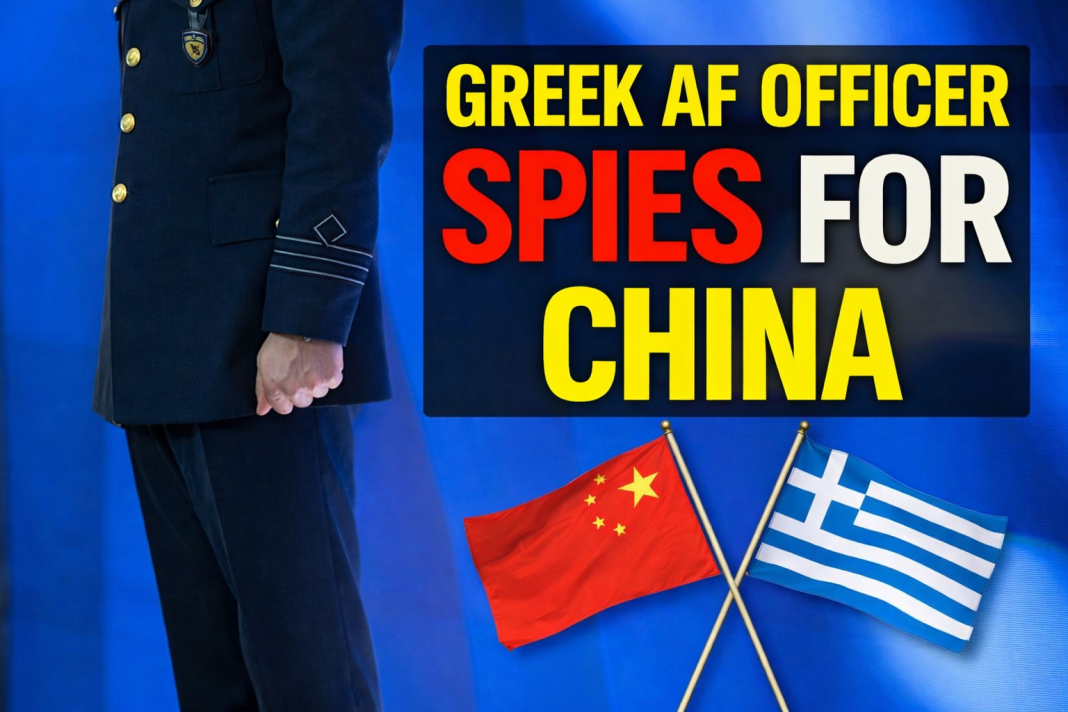
The arrest of a senior Greek Air Force officer for spying for China is not merely another espionage case. It is a systemic shock to Greece’s defense establishment and a stark reminder that insider threats remain one of the most dangerous vulnerabilities within NATO-aligned states.
Greek authorities confirmed that a serving Wing Commander (Σμήναρχος) of the Hellenic Air Force was detained after a prolonged counter-intelligence operation. The case has already triggered concern beyond Greece’s borders, given the officer’s access to sensitive NATO-linked systems and Greece’s strategic position in the Eastern Mediterranean.
An insider with privileged access
Unlike classic espionage scenarios involving diplomats or external agents, this case centers on a career officer embedded deep within the military chain of command. According to Greek press accounts, the suspect held a command and communications-related role that granted him routine exposure to classified material, including operational and technical data shared with allies.
This is what elevates the case from a criminal act to a strategic breach: the information allegedly transferred was not marginal, nor purely national. It sat at the intersection of Greek defense planning and alliance obligations.
Confession and covert channels
Reports indicate that the officer confessed to spying on behalf of China, acknowledging that he transmitted classified information using encrypted digital tools designed to evade detection. These were not amateur methods. The sophistication of the communications suggests training, guidance, or long-term grooming, rather than an impulsive or isolated act.
Equally troubling are indications that the suspect may have explored expanding the operation, a classic hallmark of intelligence services seeking to build durable networks rather than rely on a single asset.
How the alarm was raised
The case reportedly began not with an internal audit but through signals from allied intelligence services, which flagged irregular activity tied to Greek military systems. This prompted Greece’s intelligence authorities to initiate discreet surveillance, eventually building a file strong enough to justify arrest inside a military installation.
That external partners identified the risk first will inevitably raise questions in Athens about internal counter-intelligence readiness and the robustness of vetting procedures.
Why China matters
While espionage between states is not new, the alleged recipient of the information — China — adds a critical geopolitical layer. Beijing has been steadily expanding its intelligence footprint across Europe, with particular interest in military technology, dual-use systems, and NATO interoperability.
Greece’s geographic location, control of key maritime corridors, and role in southeastern NATO defense architecture make it an especially attractive target.
Strategic and political implications
The Greek Armed Forces have acknowledged the gravity of the incident, stressing the potential damage to national and allied security. What has not yet been disclosed — and may never be fully disclosed — is how much damage was done before the breach was contained.
For NATO partners, the case reinforces an uncomfortable reality: the weakest link is often not technology, but trusted personnel. For Greece, it exposes the limits of institutional safeguards in an era where intelligence warfare increasingly relies on insiders rather than spies crossing borders.
What remains unresolved
Key questions remain unanswered:
How long the officer was active as an intelligence asset
What specific systems or data were compromised
Whether operational plans or allied capabilities were exposed
If additional personnel were approached or compromised
The investigation is ongoing, and further developments are expected.
A warning, not an anomaly
This case should not be viewed as an isolated scandal. It is a warning signal — about complacency, about the evolving nature of espionage, and about the pressure placed on mid- and high-level officers operating in an increasingly contested geopolitical environment.
For Greece and its allies, the lesson is clear: loyalty can no longer be assumed; it must be continuously verified.
February 5, 2026, n.stamatakis@aol.com www.helleniscope.com
DISCLAIMER: The views and statements expressed in this article constitute constitutionally protected opinions of this author.
TO SUPPORT HELLENISCOPE OR BECOME A SUBSCRIBER, LINK HERE!!
Major Citations
Greek Media
ΤΟ ΒΗΜΑ: high-ranking officer arrested, confessed to spying for China.
Ta Nea and Parapolitika: detailed reports on espionage, encryption software, and transmission of secret info to China.
PowerGame & TheTOC: unit commander at Kavouri transmitted information using encrypted systems.
In.gr: confirms officer’s confession and alleged transmission of NATO plans to China.
Tanea: how ΕΥΠ tracked him and his access to classified NATO data.
International Coverage
Reuters: official arrest, leak of “secret information” to third parties, ongoing investigation.
Euractiv: espionage relates to China rivalry and specialized software usage.
Anadolu Agency: reports suspect may have tried to recruit others; NATO context.
GreekReporter.com: General Staff confirmed arrest and involvement of intelligence agencies.