

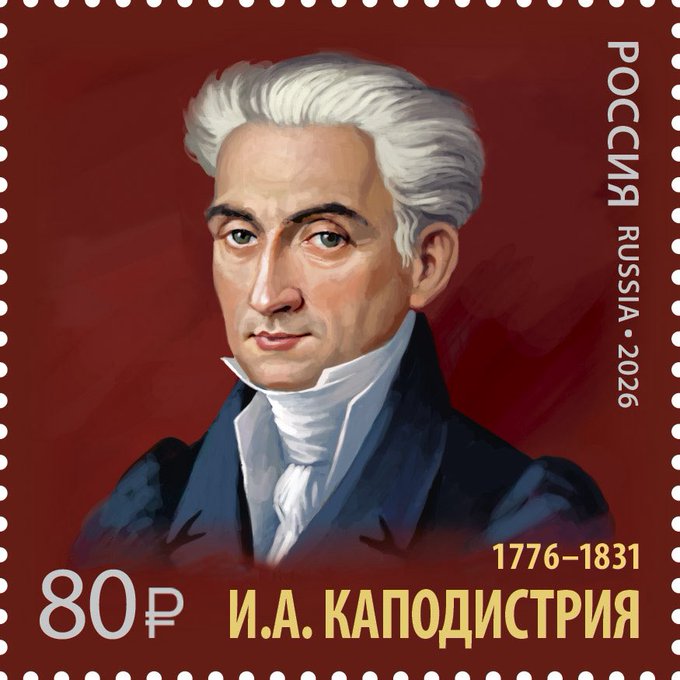
OUR MAIN PHOTO: The image of a post stamp issued by Russia today – Kapodistrias’ Birthday (February 11, 1776) to honor him.
ΕΑΝ ΠΡΟΤΙΜΑΤΕ ΕΛΛΗΝΙΚΑ ΠΑΤΗΣΤΕ ΤΗ ΣΗΜΑΙΑ ΣΤΟ ΚΑΤΩ ΜΕΡΟΣ ΤΗΣ ΟΘΟΝΗΣ
By Helleniscope’s Editorial Team
In the ruins of Napoleonic Europe, as empires recalculated and victors redrew the map, one diplomat stood at the center of power.
His name was Ioannis Kapodistrias.
History remembers him as Greek.
Russia remembers him as imperial.
Switzerland remembers him as a guarantor of neutrality.
But few remember this:
He also helped prevent the dismemberment of France.
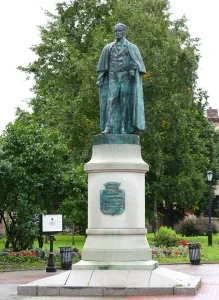
PHOTO: Statue of Kapodistrias in St. Petersburg, Russia
Russia: The Imperial Strategist
Under Tsar Alexander I of Russia, Kapodistrias rose to the position of State Secretary for Foreign Affairs.
At the Congress of Vienna, Europe’s victors debated how to reshape the continent after Napoleon’s defeat.
Some powers — particularly hardline factions in Britain and parts of the German states — favored a severe weakening of France. There were proposals to fragment French territory or permanently cripple it to prevent another continental war.
Kapodistrias opposed this.
He argued that humiliating France would destabilize Europe and invite future conflict. Instead, he supported a balanced settlement — reintegrating France into the European system rather than dismantling it.
His reasoning was strategic:
A stable Europe required equilibrium, not revenge.
France remained intact.
And Europe avoided what could have become another cycle of revolutionary retaliation.
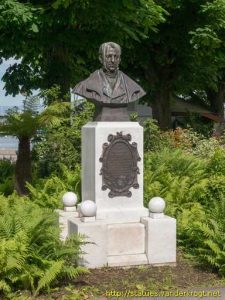
PHOTO: Statue of Kapodistrias in Lausanne, Switzerland
Switzerland: The Neutral State Preserved
At the same Congress, Kapodistrias championed Switzerland’s permanent neutrality.
He defended:
The unity of the Swiss Confederation
The incorporation of Geneva, Valais, and Neuchâtel
International recognition of Swiss neutrality
Switzerland today still rests on the settlement he helped secure.
Greece: The Founder
Yet for all his European achievements, Kapodistrias left imperial power behind.
He resigned from the Russian service, as he had promised the Russian Czar before being appointed, to assume his role leading the Revolution. Kapodistrias never applied for or was given Russian citizenship.
And in 1827, he accepted the role of Governor of a devastated, newly independent Greece.
He built:
The first modern Greek administration
The first national currency, the Phoenix
Schools and military institutions
He attempted to create a functioning state out of chaos.
And for that effort, he paid with his life.
He was assassinated in 1831.
The National and Kapodistrian University of Athens bears his name.
Statues stand in Nafplio and Corfu.
He is remembered as the founding architect of modern Greece.
France: The Balance Restored
France rarely places Kapodistrias at the center of its historical narrative.
But at Vienna, when calls for punitive fragmentation gained traction, Kapodistrias supported Tsar Alexander’s more moderate line — reintegrating France into the Concert of Europe rather than reducing it to a broken state.
The result?
France remained territorially intact (with some border adjustments), preserved its sovereignty, and soon re-entered the European diplomatic system as a major power.
Had the hardliners prevailed, Europe might have seen renewed instability within a generation.
Kapodistrias understood something many did not:
Peace is not secured by humiliation.
It is secured by balance.
February 11, 2026, n.stamatakis@aol.com www.helleniscope.com
DISCLAIMER: The views and statements expressed in this article constitute constitutionally protected opinions of this author.














Below are excerpts from letters of Governor Kapodistrias to leaders of foreign countries.
Excerpt: Letter to the Minister of Foreign Affairs of France, 1828.
“Noble gentlemen, our homeland is on the brink of an abyss. The needs of the nation require your immediate and decisive support.”
Excerpt: Source: Letter to the British Prime Minister, 1829.
“The solidarity of nations is beneficial to the maintenance of peace and justice, and only through common efforts can tranquility be restored.”
Excerpt: Source: Letter to Tsar Nicholas, 1831.
Excerpt:
“For the good of Europe, the cooperation of the great powers is necessary; your interventions in the internal affairs of states must be cautious.”
Excerpt: Source: Letter to Pope Gregory XVI, 1830.
“Hellas, as a civilized nation, demands your support to secure its freedoms and its values.”
Source: Letter to the President of the United States, 1831.
“I look forward to your cooperation, for only through common strategic moves can we maintain our independence.”
These excerpts reflect Kapodistrias’s national strategy and diplomatic relations.
From the excerpts of Ioannis Kapodistrias’s letters, several characteristics emerge that highlight his character:
Patriotism: Kapodistrias appears to have a strong patriotism, seeking the security and well-being of Greece. His letters reflect his concern for the state of his homeland and the need for support from foreign powers.
Diplomat: He demonstrates diplomatic skills by recognizing the importance of cooperation with other nations and by seeking to manage international relations in Greece’s best interests. His language is careful and conciliatory, addressing foreign leaders with respect.
Visionary: He indicates a broader understanding of the political situation in Europe and believes in the solidarity of nations, proposing collaborations for peace and justice.
Humanistic and Human Value: He emphasizes human value and the rights of nations, recognizing Greece’s need to be a civilized state and to claim support for its right to autonomy.
Strict yet Strategic: Despite his insistence on the need for assistance, he maintains a serious, strategic approach in his communications to persuade foreign leaders of the necessity of their support.
Sevi Boutos