
ΕΑΝ ΠΡΟΤΙΜΑΤΕ ΕΛΛΗΝΙΚΑ ΠΑΤΗΣΤΕ ΤΗ ΣΗΜΑΙΑ ΣΤΟ ΚΑΤΩ ΜΕΡΟΣ ΤΗΣ ΟΘΟΝΗΣ
Let’s note here that Prokopiou was among the first to break the embargo against Russia and carry Russian oil!! This gives you a clear idea of what it means to carry on your shoulders 3,000 years of Greek maritime tradition!! And explains why Helleniscope has repeatedly suggested that the Foreign Ministry in Athens should have a permanent advisory committee comprising exclusively of the most experienced shipowners!!
In the narrow waters of the Strait of Hormuz—where missiles, mines, and geopolitics threaten one of the world’s most vital shipping lanes—a familiar pattern has emerged: when others hesitate, Greeks keep sailing.
A Greek-operated tanker carrying Saudi crude recently passed through the strait, one of the first large vessels to do so since escalating tensions caused many shipping companies to suspend operations. The passage is significant because roughly one-fifth of the world’s oil supply flows through this corridor, making it indispensable to global commerce but extraordinarily dangerous in times of conflict.
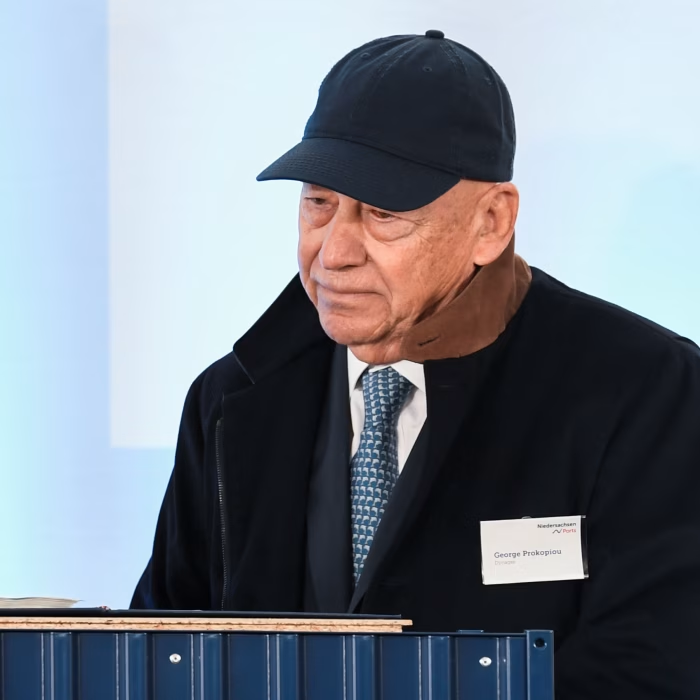
While many shipping firms have paused operations, some Greek shipowners have made a different calculation. At the center of the story is 79-year-old shipping magnate George Prokopiou, one of the most influential figures in modern maritime transport. Through companies including Dynacom Tankers Management, Dynagas, and Sea Traders, Prokopiou has built a vast fleet specializing in oil tankers and liquefied gas carriers, positioning his ships at the center of the global energy trade. In recent weeks, several vessels linked to his companies reportedly sailed through the strait despite the rising risks—sometimes with transponders switched off and additional security onboard.
The incentive is clear. With many competitors unwilling to enter the danger zone, freight rates have surged, and some voyages are reportedly earning hundreds of thousands of dollars per day. In shipping, danger often translates directly into profit. Let’s note here that Prokopiou was among the first to break the embargo against Russia and carry Russian oil!! This gives you a clear idea of what it means to carry on your shoulders 3,000 years of maritime tradition!! And explains why Helleniscope has repeatedly suggested that the Foreign Ministry in Athens should have a permanent advisory committee comprising exclusively of the most experienced shipowners!! Here is a video to get to know him better:
Yet the risks are real. Hundreds of Greek-linked vessels operate across the wider Gulf region, and thousands of sailors have found themselves navigating an increasingly volatile maritime environment. Maritime unions in Greece have even staged strikes over crews stranded near the strait and the dangers faced by seafarers operating in what increasingly resembles a war zone.
To understand why Greeks often appear at the center of such high-risk trade routes, one must look beyond the present crisis to the deeper traditions of Greek seafaring.
For more than three millennia, Greek sailors have navigated dangerous waters in pursuit of trade. Ancient merchants sailed from the Aegean to the Black Sea and across the Mediterranean long before modern states existed. Later generations—from the island fleets of Hydra and Chios to the merchant captains of the Ottoman and Napoleonic eras—built fortunes by carrying cargo through uncertain and often hostile seas.
Modern Greek shipping continues that legacy. Today Greece controls the largest merchant fleet in the world, a dominance built on a willingness to operate in volatile markets and difficult waters. Figures like Prokopiou embody that tradition: patient during downturns, aggressive when opportunity appears, and always focused on the arteries of global commerce—especially energy.
In that sense, the ships now crossing the Strait of Hormuz are not merely tankers. They are the latest chapter in a 3,000-year story of Greek maritime audacity.
From the triremes of classical Athens to the supertankers of today’s oil trade, Greek seafarers have long understood a simple truth:
The sea rewards those willing to take the risk…
Sources and Further Reading
Financial Times — The billionaire “buccaneer” braving the Strait of Hormuz
https://www.ft.com/content/dd3444c7-b8fa-4f6c-9451-ffb9e2525cd9Wall Street Journal — The Billionaire Whose Ships Are Braving Missiles in the Strait of Hormuz
https://www.wsj.com/business/energy-oil/the-billionaire-whose-ships-are-braving-missiles-in-the-strait-of-hormuz-1f43f84cReuters — Greek-operated tanker with Saudi oil sails through Strait of Hormuz
https://www.reuters.com/world/middle-east/greek-operated-tanker-with-saudi-oil-cargo-sails-through-hormuz-ship-tracking-2026-03-09/Reuters — Greek shipping minister warns of alarming situation in Strait of Hormuz
https://www.reuters.com/world/middle-east/greek-shipping-minister-warns-alarming-situation-strait-hormuz-2026-03-03/Reuters — Greek seafarers strike over crews stranded in the Gulf
https://www.reuters.com/world/europe/greek-seafarers-strike-over-crews-stranded-gulf-by-iran-war-2026-03-05/Marine Insight — Greece warns of “alarming” Strait of Hormuz crisis as hundreds of Greek-linked ships operate in the region
https://www.marineinsight.com/shipping-news/greece-warns-of-alarming-strait-of-hormuz-crisis-as-over-325-greek-linked-ships-operate-in-high-risk-zone/Dynagas / Dynacom corporate background — company information on fleets and operations
https://www.dynagas.com
https://www.dynacomtankers.com
March 9, 2026, n.stamatakis@aol.com www.helleniscope.com
DISCLAIMER: The views and statements expressed in this article constitute constitutionally protected opinions of this author.