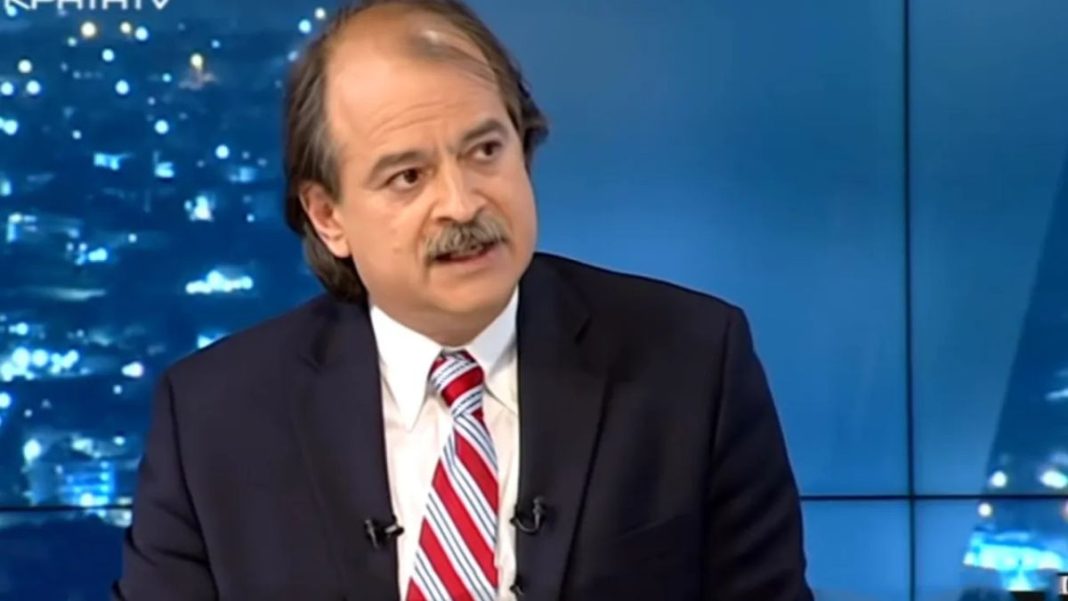
John Ioannidis, discussing Greece’s long-standing failure to retain and nurture its intellectual talent, argues that while Greece consistently produces world-class scientists, innovators, and skilled professionals, it has been unable to create the conditions for them to thrive at home. Instead, bureaucracy, nepotism, lack of meritocracy, poor working conditions, and limited opportunities push many of the country’s brightest people abroad. Ioannidis stresses that this “brain drain” has not meaningfully reversed despite optimistic public narratives. More broadly, he contends that the problem extends beyond academia to anyone who desires to create, innovate, or contribute meaningfully to society, leaving many Greeks feeling frustrated and deprived of dignity and opportunity.
The discussion then broadens to the health of Greek institutions and public life. Ioannidis argues that mediocrity, entrenched political and economic interests, weak democratic institutions, and declining freedom of expression have created an environment where excellence is often discouraged rather than rewarded. He expresses concern that public discourse increasingly promotes an idealized picture of national progress while masking deeper structural problems. Drawing on his experiences during the COVID-19 pandemic, he criticizes what he sees as the politicization of science, the suppression of dissenting scientific opinions, and the erosion of public trust in scientific institutions. He emphasizes that science can only serve society if it remains transparent, independent, and committed to evidence rather than political or commercial interests.
Finally, Ioannidis discusses the opportunities and risks posed by artificial intelligence and modern technology. He views AI as a powerful tool that could greatly benefit humanity, but warns that it could also concentrate power in the hands of a small number of governments or technology companies if not guided by democratic oversight and public accountability. Throughout the interview, he advocates for open debate, stronger democratic institutions, meritocracy, and policies that place human well-being above political or financial interests. While acknowledging the seriousness of the challenges facing Greece and modern science, he maintains that change remains possible through honest public discussion, institutional reform, and the defense of scientific integrity.
A MUST WATCH INTERVIEW WITH ENGLISH SUBTITLES