1400 χρόνια απο την πολιορκία της Πόλης στις 8 ΑΥΓΟΥΣΤΟΥ 626 μΧ
800 χρόνια Μουσικης & Αγιογραφίας του ΑΚΑΘΙΣΤΟΥ ΥΜΝΟΥ
Του Νίκου Σταματάκη
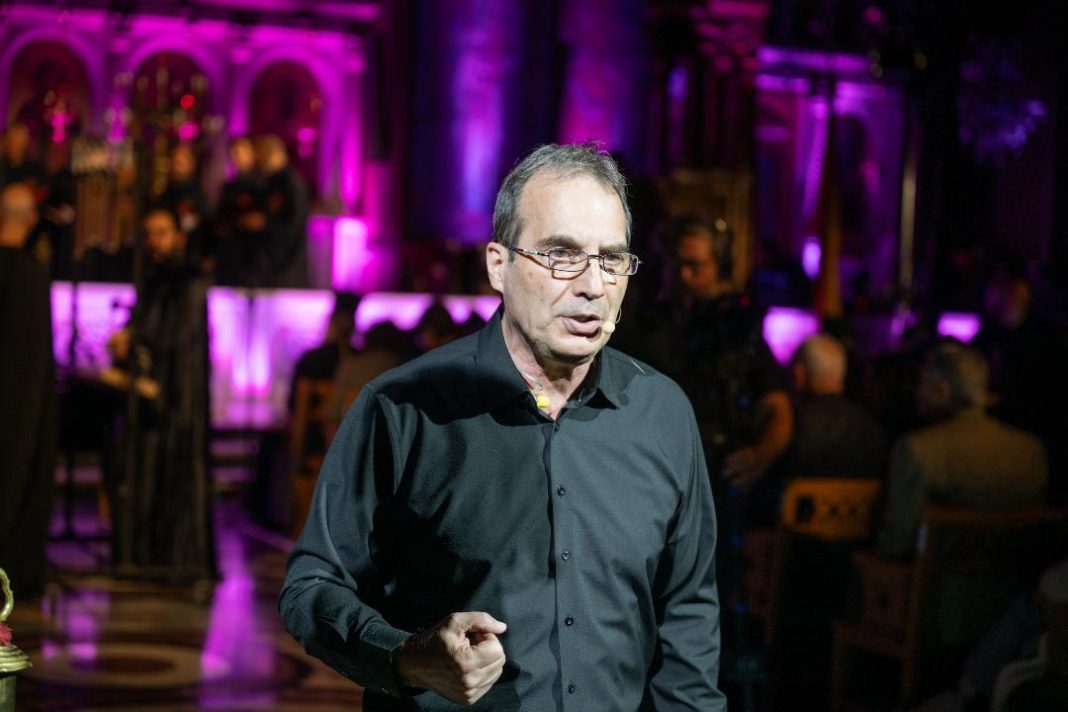
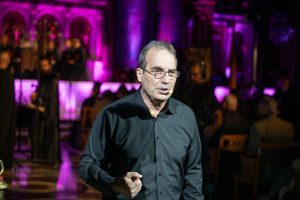
Με αφορμή τα 1.400 χρόνια απο την νύκτα 7-8ης Αυγούστου 626 μΧ, συνομιλήσαμε με τον Δρ Γιώργο Μπιλάλη, πλαστικό χειρουργό στόματος, πρωτοψάλτη και χοράρχη του μουσικού συνόλου Romeiko, που γύρισε το ρολόι μας πισω στα μουσικά και ιστορικά δρώμενα της εποχής εκείνης, αλλά και την μετέπειτα διαδρομή του Ακαθίστου Ύμνου στην λατρεία, την μουσική και την ζωγραφική του απεικόνιση.
ΙΣΤΟΡΙΚΑ ΓΕΓΟΝΟΤΑ το 626 μΧ.
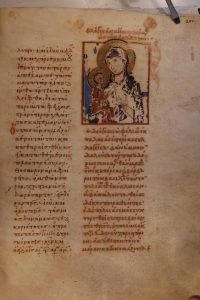
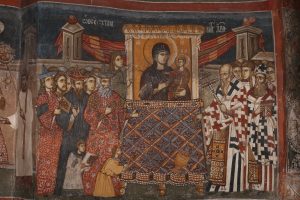
H Κωνσταντινούπολη απο τις 29 Ιουνίου 626 και για 37 μέρες πολιορκείται για δωδέκατη φορά στην ιστορία της (η πρώτη έγινε το 510 πΧ απο τους Πέρσες στο τότε Βυζάντιο), η δεύτερη απο την ίδρυσή της στις 11 Μαίου 330μΧ σαν πρωτεύουσα του Ρωμαϊκού κράτους (Νέα Ρώμη) απο τον Μ. Κωνσταντίνο. Η Πόλη είναι απροστάτευτη, αφού ο Αυτοκράτορας Ηράκλειος λείπει με τον στρατό του για 20 χρόνια σε διαρκή πόλεμο με τους Πέρσες στα ανατολικά για να ανακτήσει τον Τ. Σταυρό. Η Πόλη έχει περικυκλωθεί απο βορειοδυτικά απο τους Αβάρους και Σλάβους και ανατολικά απο τους Πέρσες. Στις 6 Αυγούστου οι πολιορκητές καταλαμβάνουν την Παναγία των Βλαχερνών και ετοιμάζονται για την ολοκληρωτική κατάληψη της Πόλης. Ο λαός της Πόλης με τον Πατριάρχη και λίγο στρατό έτρεχαν πάνω στα τείχη με την εικόνα της Κυρίας Θεοτόκου επικαλώντας την βοήθεια της (βλ. φωτο 1).
Ξημερώματα της 8ης Αυγούστου μετά απο έναν δυνατό υδροστρόβιλο (twister), ο στόλος των πολιορκητών καταποντίζεται, οι αμυνόμενοι προξενούν τεράστιες απώλειες στους Αβάρους και Πέρσες και έτσι λύεται η πολιορκία της Πόλης. Το γεγονός του αστραπιαίου τυφώνα (twister), που διέλυσε το ναυτικό των Αβάρων και Περσών και τους έτρεψε σε φυγή, οι Πολίτες το απέδοσαν σε θαύμα της Θεοτόκου. Οι Πολίτες θέλησαν να γιορτάσουν τη σωτηρία τους αποδίδοντας ευχαριστίες στην Θεοτόκο. Ετσι, στις 8 Αυγούστου το βράδυ μαζεύτηκαν στην Παναγία των Βλαχερνών με τον Πατριάρχη Σέργιο και έψαλλαν ΟΡΘΙΟΙ ένα μουσικό ποίημα στην ακολουθία της Παννυχίδος, εξ ου και η προέλευση της ονομασίας ΑΚΑΘΙΣΤΟΣ ΥΜΝΟΣ. Σήμερα το γεγονός της σωτηρίας της 8ης Αυγούστου και της δημιουργίας του Τη ΥΠΕΡΜΑΧΩ δεν εορτάζεται, όπως άλλες εορτές της Κωνσταντινουπόλεως, π.χ. Η Εκκλησία θυμάται και τιμά την 1η Αυγούστου για την πρόοδο (= λιτανεία) του Τίμιου Σταυρού στην βυζαντινή Κωνσταντινούπολη ἤ την 11η Μαίου, ημέρα εγκαινιασμού της Πόλεως κλπ.
Οι λόγοι που αποσιωπήθηκε το νικητήριο γεγονός είναι πολλοί. Ο Σέργιος είχε γράψει ένα Κοντάκιο για τον Ευαγγελισμό, που στις 8 Αυγούστου 626 αλλάζει τον πρόλογο του απο “Το προσταχθέν…” σε “Τη Υπερμάχω..” για να ευχαριστήσει την Θεοτόκο για την διάσωση της Πόλης και το μετατρέπει και σε Εθνικό Παιάνα των Βυζαντινών. Αυτός είναι και ο βασικός λόγος που ο Ακάθιστος εορτάζεται στο Τυπικό της Εκκλησίας κοντά στην σταθερή ημερομηνία του Ευαγγελισμού στις 25 Μαρτίου. Άλλος λόγος είναι ότι κατὰ τὸν Αύγουστο ὁ αὐτοκράτορας ἀπουσίαζε πολλές φορές σὲ ἐκστρατίες καὶ δὲν μποροῦσε νὰ συμμετέχει στὰ ελευθέρια τῆς Πόλης. Τρίτος λόγος και καταληκτικός ειναι, οτι μετά την αναίμακτη ανάκτηση της Κωνσταντινουπόλεως απο τους Λατίνους το έτος 1261, γράφτηκε ο Μεγάλος Παρακλητικός Κανόνας προς την Θεοτόκο απο τον Θεόδ. Λάσκαρη. Από τότε, εισήχθη στην λατρεία η ψαλμώδηση των δύο παρακλητικών κανόνων στην περίοδο του 15αυγούστου, που ειναι μέρες νηστείας και προσευχής.
ΜΟΥΣΙΚΑ ΔΡΩΜΕΝΑ στο 626
Απο την πρώτη Οικουμενική Σύνοδο (325μΧ) και εξ αιτίας του Αρείου που μεταλαμπάδευε τις δοξασίες του στους πιστούς του με μουσικά ποιήματα (Θάλεια), η Εκκλησία χρησιμοποίησε μουσική ποίησι για να εκφράσει τα θεολογικά της δόγματα και τις τριαδικές δοξολογήσεις. Ετσι, με την έλευση του Ρωμανού μελωδού στην Πόλη το έτος 518, εισάγεται στη λατρεία το μουσικό ποιητικό είδος των Κοντακίων. Το Κοντάκιο αποτελείται από: 1. ένα πρόλογο (κουκούλιο) 2. στροφές (Οίκοι) που ανάλογα με τον ποιητή, σχηματίζουν μία ακροστιχίδα: τα αρχικό γράμμα του κάθε Οίκου σχηματίζει μία λέξη, 3. το τέλος του κάθε Οίκου έχει ένα σταθερό εφύμνιο. Ολα τα Κοντάκια του Ρωμανού έχουν σαν ακροστιχίδα μία φράση με το όνομά του.
Απο τις 8 Απριλίου 610 πατριαρχεύει ο Σέργιος που ήταν και μουσικός ποιητής. Ο πρώτος που αποδίδει στον Σέργιο σαν ποιητή του Ακαθίστου όσο και του Κοντακίου για την Κοίμηση της Θεοτόκου ειναι ο βενεδικτίνος καρδινάλιος J.B. Pitra (†1889) στο έργο του Analecta Sacra Spicilegio Solesmensis pg.250. Τον εικοστό αιώνα βυζαντινολόγοι, ιστορικοί, φιλόλογοι, μουσικολόγοι, θεολόγοι προσπάθησαν να διαλευκάνουν τον άγνωστο ποιητή του Ακαθίστου Υμνου και αναλογα με τον ερευνητή, παρέλασαν πολλά πιθανά ονόματα ποιητών του 6ου μεχρι και 9ου αιώνος. Ολοι τους αγνόησαν την κυρία ιδιότητα του Σεργίου ως συνθέτη και στιχουργού ταυτόχρονα με την υπάρχουσα μουσική δραστηριότητα, που το αποτύπωμά της φθάνει μέχρι και σήμερα στην λειτουργική χρήση!
Ο ερευνητής Μανώλης Θεοδωράκης, πολ. μηχανικός, πρωτοψάλτης και λειτουργιολόγος, μας αποκαλύπτει το πλήρες πορτρέτο του Σεργίου και λύνει οριστικά την διαμάχη των ερευνητών του 20ου αιώνα για το ποιός έγραψε τον Ακάθιστο Υμνο. Ο Σέργιος συνθέτει το έτος 617 τον ύμνο “Νυν αι δυνάμεις των Ουρανών” που καθιερώθηκε να ψάλλεται αντί χερουβικού μέχρι σήμερα στην Προηγιασμένη Λειτουργία, έγραψε τον ύμνο “Πληρωθήτω το στόμα ημών αινέσεως” που επιζεί μέχρι σήμερα στις 3 Λειτουργίες της Ορθοδοξίας. Ο Σέργιος καθιερώνει την 2α Ιουλίου ως εορτή του Ενδύματος της Θεοτόκου στην Παναγία Βλαχερνών. Και προσπαθώντας να μοιάσει στον ΡΩΜΑΝΟ που κυριαρχεί στην λειτουργική ζωή της Εκκλησίας με τα περίφημα κοντάκια του, μελοποιεί 2 Κοντάκια και αυτός μεταξύ των ετών 623-625: ένα για τον Ευαγγελισμό με ακροστιχίδα όλα τα γράμματα του αλφαβήτου Α-Ω και ένα για την Κοίμηση της Θεοτόκου με ακροστιχίδα τα γράμματα του αλφαβήτου Α-Μ και το Ω. Στο πρώτο, το κοντάκιο του Ευαγγελισμού, ο Σέργιος ξεφεύγει απο τον συνήθη κανόνα των Κοντακίων και εισάγει δυο εφύμνια ως εξής: στα μεν μονά γράμματα (Α,Γ,Ε,Ζ,…,Ψ) προσθέτει 12 χαιρετισμούς και καταλήγει με το εφύμνιο Χαίρε Νύμφη Ανύμφευτε. Στα ζυγά γράμματα (Β,Δ,Η,…,Ω) καταλήγει με το εφύμνιο Αλληλούια.
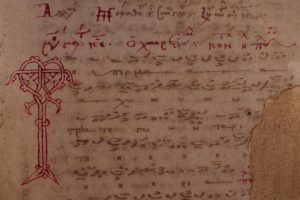
ΦΩΤΟ #2: Τη Υπερμάχω σε μουσικη σημειογραφία, χφ. Messina 120 f84r
Το υπάρχον μουσικό ποίημα του Πατριάρχη Σεργίου με τις 24 στροφές και ακροστιχίδα τα γράμματα του Αλφαβήτου Α-Ω τραγουδήθηκε στην ακολουθία Παννυχίδος (δεν διαβάστηκε τότε, οπως κατάντησε σήμερα…) τη νύχτα της 8ης-9ης Αυγούστου στη Παναγία των Βλαχερνών με κλήρο και λαό όλοι ΟΡΘΟΙ´, που διήρκεσε περίπου 3-4 ωρες σαν ένας νικητήριος ύμνος για την διάσωση της Πόλης. Εκείνη την μέρα, ο συνθέτης Πατριάρχης Σέργιος έγραψε σε μουσική και ποίηση το ΤΗ ΥΠΕΡΜΑΧΩ σε ήχο πλάγιο Δ´ (βλ. φωτο 2) – αυτή ήταν και η πρακτική όλων των μελοποιών απο τον 5ο μέχρι και 10ο αιώνα, στιχουργός και συνθέτης το ίδιο πρόσωπο- και το προσέθεσε στο υπάρχον Κοντάκιο του Ευαγγελισμού, αντικαθιστώντας τον ήδη υπάρχοντα πρόλογο “Το Προσταχθέν μυστικώς…”.
Ο Ρωμανός, στο Κοντάκιό του για τον Ευαγγελισμό, διαρθρώνει με την μουσική γραφίδα του σε ήχο Α´ το κουκούλιο “Οτι ουκ έστιν ως συ ελεήμων…” και 18 Οίκους με ακροστιχίδα του ταπεινού Ρωμανού, έχει δε σταθερό εφύμνιο σε όλους τους οίκους Χαίρε νύμφη Ανύμφευτε, ενώ εξυμνεί την Θεοτόκο με μόνο 8 χαιρετισμούς. Ο Σέργιος, στο δικό του κοντάκιο για τον Ευαγγελισμό μελοποιημένο σε ήχο πλάγιο Δ´, έχει πλέον το νικητήριο κουκούλιο “Τη Υπερμάχω” και 24 Οίκους με ακροστιχίδα Α-Ω, αλλά καινοτομεί με 2 εναλλασσόμενα εφύμνια Χαίρε νύμφη Ανύμφευτε/Αλληλούια, εξυμνεί δε την Θεοτόκο με 144 χαιρετισμούς. Ο Ακάθιστος Υμνος, δηλαδή “Τη Υπερμάχω”, και οι 24 Οίκοι διαδόθηκαν γρήγορα, τραγουδήθηκαν απο στόμα σε στόμα, αγαπήθηκαν απο τους μοναχούς και πιστούς, ο ποιητής του όμως αποσιωπήθηκε μιας και ο Σέργιος πέθανε αιρετικός, ασπαζόμενος την αίρεση του μονοθελητισμού. Η Εκκλησία όμως διατήρησε όλους τους ύμνους του Σεργίου μέχρι και σήμερα.
Ο Ακάθιστος, σαν ποίημα, έγινε δομικό λειτουργικό πρότυπο για να γραφτούν σε κατοπινούς αιώνες και άλλοι “χαιρετισμοί”, π.χ. για τον Τ. Σταυρό κλπ. Στη διαδρομή δε των αιώνων, ο Ακάθιστος Υμνος με τα 144 Χαίρε προς την Θεοτόκο έγινε καθημερινή προσευχή στα μοναστήρια, χάνοντας την αρχική του μορφή ως ύμνου και καταλήγοντας μία διαβαστή προσευχή… Αργότερα, οι 24 Οίκοι ενσωματώθηκαν στην ελληνόφωνη λειτουργική παράδοση της ακολουθίας Αποδείπνου, γνωστοί στον κόσμο σαν “Χαιρετισμοί” τις πρώτες τέσσερις βδομάδες της Μ. Σαρακοστής, όπου διαβάζονται οι 24 Οίκοι χωρισμένοι σε 4 ενότητες. Ολοι οι ορθόδοξοι γιορτάζουν τον Ακάθιστο Υμνο το πέμπτο Σάββατο Νηστειών, όπου δυστυχώς σήμερα διαβάζεται και ΔΕΝ ψάλλεται ο Υμνος αυτός, όπως τότε. Και όχι μόνον, αλλά υπάρχει μεγάλη σύγχυση σε κληρικούς και λαϊκούς στις ελληνόφωνες εκκλησίες για το ποιος ειναι ο Ακάθιστος Υμνος, μπερδεύοντάς τον με τον Κανόνα που έχει σαν πρώτο ειρμό Ανοίξω το στόμα μου.
ΤΗ ΥΠΕΡΜΑΧΩ και η ΜΟΥΣΙΚΗ του πορεία
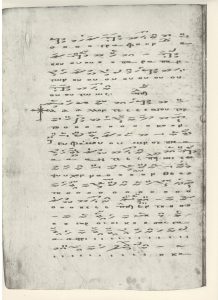
ΦΩΤΟ #3. Ψάλλοντές σου τον τόκον, χφ Ashburhamensis 64 f. 40v
Η μουσική επένδυση του Τη Υπερμάχω και των 24 Οίκων (Α-Ω), μελοποιημένα αρχικά σε ήχο πλάγιο του Τετάρτου μεταδίδεται απο στόμα σε στόμα ανα τους αιώνες στην αυτοκρατορία. Η μουσική τόσο στον πρώιμο χριστιανισμό αλλά και στην Νἐα Ρώμη ήταν ένα κομμάτι αυτόφωτο που διατηρούσαν οι ψάλτες απο γενιά σε γενιά προφορικά την αρχική μελωδία. Αυτό συμβαίνει σε όλους τους ανατολικούς λαούς. Απο τον 9-10ο αιώνα, δημιουργείται και γράφεται μουσική στους χειρόγραφους κώδικες χρησιμοποιώντας τους τόνους και τα πνεύματα της ελληνικής γλώσσης για να δείξουν την μελωδική γραμμή του ποιήματος. Ετσι, στο ΨΑΛΤΙΚΟ χειρόγραφο βιβλίο του 13ου αιώνος, γνωστό ως Κοντακάριο Ashburhamensis 64 γραμμένο απο τον μοναχό Παγκράτιο της Μονής Κρυπτοφέρρης (βλ. φωτο 3), έχει όλο τον Ακάθιστο Υμνο σε μουσική παρτιτούρα.
Η μουσική γραφή στο χειρόγραφο αυτό, γνωστή σαν μέση βυζαντινή σημειογραφία, δεν διαβάζεται σήμερα από τους ψάλτες. Το 1814, εισήχθη στην Κωνσταντινούπολη η μεταρρύθμιση των Τριών Δασκάλων, σαν φυσική μετεξέλιξη της Παλαιάς Παρασημαντικής, εισάγοντας την Νέα Μέθοδο γραφής για τους ύμνους της εκκλησίας. Η Νέα Μέθοδος διαδόθηκε γρήγορα και απο το 1820 άρχισαν να τυπώνονται πλέον τα βιβλία της νεοβυζαντινής Ψαλτικής, γεγονός που έδωσε μεγαλύτερη ώθηση στην διάδοση και επικράτηση της Νέας Μεθόδου γραφής και ψαλμωδήσεως των ύμνων.
Το 2010, ο μουσικολόγος Ιωάννης Αρβανίτης, φυσικός, πρωτοψάλτης και συνθέτης, έσπασε τον κώδικα αναγνώσεως της μέσης βυζαντινής σημειογραφίας, μια μουσική παράδοσι επτά αιώνων. Μεταγράφοντας το παλαιό ρεπερτόριο με την Κλείδα ερμηνείας του Αρβανίτη στη Νέα Μέθοδο (βλ. φωτο 4 – συνδεθείτε εδώ φωτο 4. Τη Υπερμαχω του Ψαλτικου στη Νεα Μεθοδο), ο Αρβανίτης ξεκλειδώνει συνάμα χιλιάδες συνθέσεις κλασσικής και λειτουργικής μουσικής των βυζαντινών και δίνει την δυνατότητα στους νεωτέρους ψάλτες και ερευνητές να ακούσουν αφενός τον πρωτογενή ήχο των μεσαιωνικών ψαλτών, αλλά κυρίως δίνει ένα δυνατό ερευνητικό εργαλείο για να δούμε αυτή την απολιθωμένη μουσική με σύγχρονο μάτι και αυτί. Ετσι, το 2017 ο Αρβανίτης μεταγράφει το Τη Υπερμάχω και Αγγελος Πρωτοστάτης απο το χειρόγραφο βιβλίο ΨΑΛΤΙΚΟ και το σύνολο Ρωμαίικο, κάτω απο την φωνητική και μουσική προπόνηση του γράφοντος, παρουσίασε σε παγκόσμια πρώτη ερμηνεία στον Καθεδρικό Ναό Αθηνών το 2018 τον Ακάθιστο Υμνο οπως εψάλλετο τον 12ο αιώνα μέσα στην εκκλησία.
Ακούγοντας τον ήχο του ΤΗ ΥΠΕΡΜΑΧΩ, Ήχος πλ. Δ´, από το βιβλίο του Ψαλτικού, χειρόγραφο Ashburhamensis 64, παρατηρούμε οτι σε κάθε πρόταση του ύμνου, ο μονοφωνάρης προτάσει μια μουσική φράση ενδεικτική του ήχου που θα ψαλλεί η πρόταση, ένα δείγμα της μεσαιωνικής ψαλτικής ερμηνείας. Δηλαδή:
Νεάγιε (πλάγιος Δ´) Τη Υπερμάχω στρατηγώ τα νικητήρια
Νεάγιε (πλάγιος Δ´) Ως λυτρωθείσα των δεινών ευχαριστήρια
Αγια (Δ´) Αναγράφω σοι η Πόλις σου Θεοτόκε
Νεάγιε (πλάγιος Δ´) Αλλ ως έχουσα το κράτος απροσμάχητον
Νενανώ (πλάγιος Β´) Εκ παντοίων με κινδύνων ελευθέρωσον
Οι θεατές της σελίδος μπορουν να δούν στιγμιότυπο απο την συναυλία του συνόλου Ρωμαίικο στην Καθεδρικό Ναό των Αθηνών το 2018. (ακουσε παρακάτω ΤΗ ΥΠΕΡΜΑΧΩ ΕΩΣ ΤΟ 3’17”).
Στην υστεροβυζαντινή εποχή (1261-1453) πολλοί συνθέτες έγραψαν νέα μουσική (καλοφωνικά μέλη) για τον Ακάθιστο Υμνο, τους Οίκους Α-Ω, και σε διαφορετικούς ήχους απο τον παραδεδομένο πλάγιο Δ´ για χρήση σε συναυλίες και εορταστικές συναθροίσεις. Την ιδία παράδοση συνέχισαν και στην τουρκοκρατία επώνυμοι μελωδοί. Αξιοσημείωτο παραμένει η περίπτωση του Αναστασίου Ραψανιώτου (19ος αι.), που μελοποιεί τους 24 Οίκους του Ακαθίστου προσθέτοντας και έναν νέον Οίκο, σε δική του ποίηση και μέλος. Ετσι, το θαύμα της 6ης Αυγούστου 626 απο την Θεοτόκο, μας άφησε μέχρι και σήμερα ζωντανό ένα Κοντάκιο σε λειτουργική χρήση – εστω και διαβαστό -, ενώ η περίφημη συλλογή Κοντακίων του Ρωμανού, που κυριάρχησε για 4 αιώνες σαν μέσο λατρείας μέσα στην Εκκλησία, ατόνισε και λησμονήθηκε· σήμερα κάθε Κυριακή ή μεγάλη Εορτή διαβάζεται μόνον ο πρώτος Οίκος των Κοντακίων του Ρωμανού στον Ορθρο.
Θα ήταν ευχής έργο, τιμώντας και μιμούμενοι πραγματικά το γεγονός της 6ης Αυγούστου, να αναβιώσουμε την ακολουθία της Παννυχίδος με τον ΑΚΑΘΙΣΤΟ ΥΜΝΟ το Σάββατο του Ακαθίστου στην Σαρακοστή, ψάλλοντας κάποιους Οίκους, αφού η ακουστική παράδοση του ΨΑΛΤΙΚΟΥ (12ου αι.) ψάλλοντας ολα τα γράμματα Α-Ω των 24 Οίκων διαρκεί 6-7 ώρες!
ΤΗ ΥΠΕΡΜΑΧΩ και η ζωγραφική του πορεία
Ο Ακάθιστος Υμνος, το νικητήριο Κοντάκιο του Σεργίου, αποτελεί έναν αναπόσπαστο λειτουργικό ύμνο που, απο το 626 μέχρι και τουλάχιστον τον 13ο αιώνα, ψάλλεται στις κοσμικές εκκλησίες, ενώ διαβάζεται στα απόδειπνα των μοναχών. Τροφοδοτεί την ακοή των πιστών με τα θεομητορικά και χριστοκεντρικά του μηνύματα. Ας δούμε με ποιά αφορμή γίνεται ζωγραφιά για να διδάξει πλέον και οπτικά τον ενατενίζοντα πιστό μέσα στην παλαιολόγεια εκκλησία.
Το έτος 1274 ο Μιχαήλ Παλαιολόγος με τον Πατριάρχη Ιω. ΙΑ´ Βέκκο αποφασίζουν να ενωθούν οι ανατολικοί και δυτικοί χριστιανοί στη Σύνοδο της Λυών. Ο διάδοχός του Ανδρόνικος Β´ Παλαιολόγος, το έτος 1285, καλεί Σύνοδο στην Παναγία των Βλαχερνών και ακυρώνει την Ενωση των δύο Εκκλησιών. Ενας απο τους λόγους ήταν και η μαριολατρεία των δυτικών χριστιανών. Βλέποντας οι Πολίτες στα 57 χρόνια της κατάληψης της Πόλης (1204-1261) απο τους Λατίνους να μην προσκυνούν την Θεοτόκο, ψάλλουν πλέον στον Παρακλητικό κανόνα Αλαλα τα χείλη των ασεβών των μη προσκυνούντων την εικόνα την σεπτή. Η αγραμματοσύνη του λαού κατὰ τοὺς ὑστεροβυζαντινοὺς καὶ μεταβυζαντινοὺς καιρούς, προτιμοῦσε τὸ βιβλίο τῶν αγραμμάτων, την εικόνα, ἀπό τον ποιητικό ύμνο ἢ το δογματικό κείμενο. Ετσι, προσφιλείς ύμνοι για την Θεοτόκο (θεοτοκία) δημιουργούν νέα ζωγραφικά θέματα με τα οποία οι αγιογράφοι φιλοτεχνούν τις Εκκλησίες. Τα θεοτοκία Ανωθεν οι Προφήται, Ρίζα του Ιεσσαί, Ορος αλατόμητον, Ο γλυκασμός των Αγγέλων, Ρόδον το Αμάραντον, και ο Ακάθιστος Υμνος γεννιούνται σαν αγιογραφίες και εξελίσσονται σαν ζωγραφικά θέματα μέχρι και σήμερα.
Η πρώτη νωπογραφία του Ακαθίστου Υμνου, δηλαδή οι Οίκοι Α-Ω, χρονολογείται το 1296 και σώζεται στην Μονή Παναγίας Ολυμπιώτισσας στην Ελασσόνα. Ο αγιογράφος ξεκινά απο τον εξωνάρθηκα του παλαιού Καθολικου και ζωγραφίζει τα 24 γράμματα Α-Ω. Δυστυχώς, η φθορά του χρόνου μας άφησε μόνο μερικούς Οίκους. (βλ. φωτο 5) Ενα απο τα καλλίτερα διατηρημένα δείγματα αγιογραφήσεως του Ακαθίστου ειναι στο Καθολικό Αγ Δημητρίου της Μονής Μαρκόβ εξω απο την πόλη της Σκοπίων (βλ. φωτο 6).
ΦΩΤΟ #6. Ω Πανύμνητε Μήτερ, Μονή Μαρκώβ
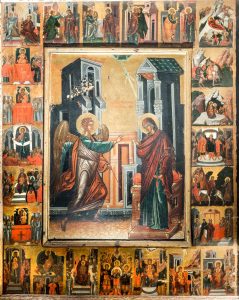
Ο ζωγράφος της παλαιολογείου εποχής απεικονίζει στα γράμματα Y, Ψ & Ω τους ψάλτες με τα σκιάδια καπέλα και τον κλήρο ασκεπή. Ο Ακάθιστος Υμνος ζωγραφίζεται και σε φορητή εικόνα απο τον 15ο αιώνα με την εξης διάταξι: Το γράμμα Δ (Δύναμις Υψίστου) κατέχει το κέντρο της εικόνος και περιφερειακά αυτής παρατάσσονται δεξιόστροφα τα υπόλοιπα 23 γράμματα (βλ. φωτο 7).
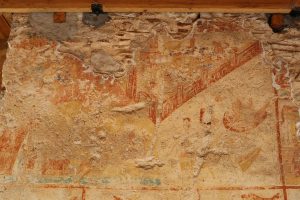
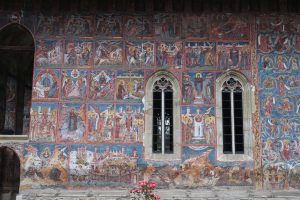
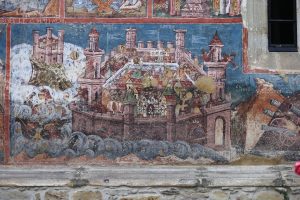
Το 1360 απεικονίζεται για πρώτη φορά ολόκληρος ο Ακάθιστος Υμνος, δηλαδή το κουκούλιο ΤΗ ΥΠΕΡΜΑΧΩ σε κεντρικό θέμα και δίπλα οι 24 Οίκοι. Στο Τη Υπερμάχω, ο ζωγράφος απεικονίζει την πολιορκία της Κων/λεως το 626 με τον Πατριάρχη Σέργιο να περιφέρει στα τείχη την εικόνα της Παναγίας μαζύ με τον λαό, ενω απο την θαλασσοταραχή καταποντίζονται οι βάρκες των Αβάρων και Περσών. Το μοναδικό δείγμα που διατηρείται σήμερα βρίσκεται στο νησί Golem Grad της Μεγάλης Πρέσπας, ελληνική κτίση μεχρι το 1914 παραχωρηθέν απο τον έλληνα Βασιληά Αλέξανδρο στον Σέρβο ομόλογό του Πέτρο και σήμερα τμήμα της ΒορειοΜακεδονίας. Η παράσταση αυτή, η μόνη που σώζεται, είναι φθαρμένη μιας και ο καλλιτέχνης την ζωγράφισε στον εξωτερικο τοίχο του καθολικού (βλ. φωτο 8).
ΦΩΤΟ #8: Tη Υπερμάχω, νωπογραφία, Καθολικό μονής Εισοδίων, Golem Grad
Δύο αιώνες αργότερα, το έτος 1537, σώζεται το δεύτερο δείγμα του Τη Υπερμάχω με τον Ακάθιστο Υμνο στην Μονή της Μολδαβίτσας (Μολδαβία) το οποίο παριστάνει την πολιορκία της πόλεως Suceava απο τους Οθωμανούς το 1527. (βλ. φωτο 9 & 9Α).
ΑΠΟ ΑΚΑΘΙΣΤΟΣ ΕΥΑΓΓΕΛΙΣΜΟΣ —> ΑΝΑΜΝΗΣΤΙΚΗ ΤΡΙΛΟΓΙΑ
Στον εορτασμό των 1400 χρόνων απο την σωτηρία της Πόλης στις 8 Αυγούστου 626, εκδίδεται εορταστικά μία τριλογία με τίτλο ΑΚΑΘΙΣΤΟΣ ΥΜΝΟΣ. Στον τόμο Α´ με τίτλο Αγγελος Πρωτοστάτης, ΗΧΟΣ πλ. Δ´, σελ. 155, περιέχονται οι μεσαιωνικοί ύμνοι του Ευαγγελισμού απο τα χειρόγραφα στιχηράριο ΕΒΕ 884 και ειρμολόγιο Κρυπτοφέρρης (στιχηρά και ειρμοί) μεταγραμμένοι στη Νέα Μέθοδο από τον Γιώργο Μπιλάλη, σύμφωνα με την Κλείδα μεταγραφής του μουσικολόγου Δρ Ιω Αρβανίτη. Η μαθητεία μου στον Ιω. Αρβανίτη ξεκίνησε το 2012 στην διδασκαλία της παλαιάς παρασημαντικής, την μεταγραφή της στη Νέα Μέθοδο και την ερμηνεία της. Στον τόμο Β´ παραθέτουμε τις μεταγραφές των στιχηρών του Ευαγγελισμού απο τα χειρόγραφα του Χουρμουζίου Χαρτοφύλακος (†1840) (ο Χουρμούζιος δεν μετέγραψε ειρμούς) ακριβώς για να δείξουμε, τόσο στον καλόπιστο ερευνητή όσο και στους δύσπιστους μουσικολόγους, την προσέγγιση της Κλείδας του Αρβανίτη στον πρωτογενή μεσαιωνικό ήχο του 1400, που πιστοποιεί την ορθότητα της μεθόδου του, αλλά και την ηχητική προσέγγιση των αργών μεταγραφών του Χουρμουζίου που μας αποτύπωσε το άκουσμα του 1800.
Ο δάσκαλος Αρβανίτης μετέγραψε το Τη Υπερμάχω και το Αγγελος Πρωτοστάτης απο το βιβλίο του Ψαλτικού, την παράδοση του 12ου αιώνος απο την Μονή της Κρυπτοφέρρης. Ο Τόμος Α´ έχει ψαλλεί όλος απο το σύνολο ΡΩΜΑΙΙΚΟ υπο την διευθυνση του γράφοντος σε ψηφιακή ηχογράφησι διαρκείας 3 ωρων και κινηματογραφήθηκε στην συναυλία στις 18 ΜΑΙΟΥ 2018.
Στον τόμο Β´ με τίτλο ΨΑΛΛΟΝΤΕΣ σου τον ΤΟΚΟΝ, ΗΧΟΣ πλ. Δ, 400 σελίδες, είναι εργασία του γράφοντος όπου συνέλεξα όλες τις σπάνιες απεικονίσεις του ΕΥΑΓΓΕΛΙΣΜΟΥ και ΑΚΑΘΙΣΤΟΥ ΥΜΝΟΥ απο νωπογραφίες, τειχογραφίες, ψηφιδωτά, φορητές εικόνες, ξυλόγλυπτα, σκαλιστά σε φίλντισι αντικείμενα, άμφια, μουσικά χειρόγραφα. Ξεκινώντας απο την κατακόμβη της Πρισκίλας στην Ρώμη, Παλέρμο, Κυπρο, Κρητη, Πρέσπες, Δαφνι, Μετέωρα, Λίμνη Ιωαννίνων, Σκόπια, Αχριδα, Κοσσοβο, Κουρμπίνοβο, Καστοριά, Γρεβενά, Ρουμανια, Καππαδοκια, Πορετσ, Μαδριτη, Μυτιλήνη, Καχριε Τζαμι, για να φωτογραφίσω ο ίδιος ολο το υλικο με χιλιαδες γραφειοκρατικές αντιξοότητες…
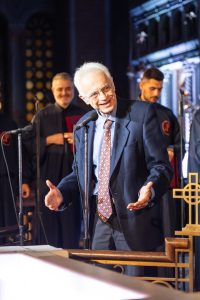
Στον τόμο Γ´ με τίτλο ΔΥΝΑΜΙΣ ΥΨΙΣΤΟΥ, ΗΧΟΣ πλ. Δ´, 200 σελίδες, είναι συλλογή θεολογικών, λειτουργιολογικών, μουσικολογικών και ιστορικών άρθρων για τον Ευαγγελισμό και τον Ακάθιστο Υμνο. Συμμετέχουν οι π. Μάξιμος ΛΑΥΡΙΩΤΗΣ, Μανώλης ΘΕΟΔΩΡΑΚΗΣ, Ιωάννης ΑΡΒΑΝΙΤΗΣ και ο γράφων. Στον τόμο αυτόν υπάρχουν όλα τα ποιητικά κείμενα που ψάλλονται στις 3 ώρες ηχογραφημένου υλικού.
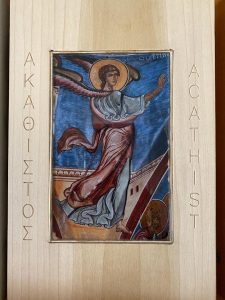
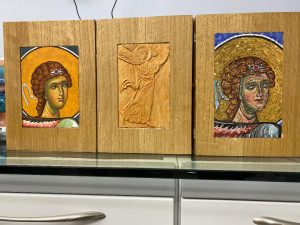
Η ΤΡΙΛΟΓΙΑ ειναι ΔΙΓΛΩΣΣΗ έκδοση στα ΕΛΛΗΝΙΚΑ & ΑΓΓΛΙΚΑ και οι 3 τόμοι εγκιβωτίζονται σε μία κασσετίνα ξύλινη, που το εξώφυλλο φιλοτεχνείται με τον ΑΓΓΕΛΟ του ΚΟΥΡΜΠΙΝΟΒΟ (1160) τυπωμενο σε plexiglass ή μωσαϊκό ἤ αγιογραφία ἤ ξυλόγλυπτο (βλ. φωτο 10 & 11). Στην κασσετίνα υπάρχει ασημένιος σελιδοδείκτης σκαλισμένος και χυτευμένος σε καθαρό ασήμι απο τον γράφοντα.
=================
ΠΕΡΙΣΣΟΤΕΡΕΣ ΦΩΤΟΓΡΑΦΙΕΣ
10. ΑΚΑΘΙΣΤΟΣ ΤΡΙΛΟΓΙΑ σε ξυλινο κουτί
11. ΑΚΑΘΙΣΤΟΣ ΤΡΙΛΟΓΙΑ με αγιογραφία, ξυλόγλυπτο, μωσαϊκό
AUGUST 8, 626: The Night the “Ti Ypermacho” Hymn Was Born — 1,400 Years of History
1400 years from the Siege of Constantinople, 8th August 626
800 years of Music and Painting of ACATHIST HYMN
By Nick Stamatakis
Marking the 1,400th anniversary of the night of August 7–8, 626 AD, we spoke with Dr. Yorgos Bilalis—a periodontal plastic surgeon, lead chanter, and director of the Romeiko Ensemble. He will transport us back to the musical and historical events of that era, while also tracing the subsequent journey of the Acathist Hymn through worship, music, and visual art.
HISTORICAL EVENTS of 626AD
Beginning on June 29, 626, Constantinople underwent a 37-day siege—the twelfth in its history (the first having been conducted by the Persians against the settlement of Byzantium in 510 BC) and the second since its establishment as the capital of the Roman state (New Rome) by Constantine the Great on May 11, 330 AD. The City was left undefended, as Emperor Heraclius had been away with his army for twenty years, engaged in a continuous war against the Persians in the East to recover the True Cross. The City was encircled by Avars and Slavs from the northwest and by Persians from the east. On August 6, the besiegers captured the Church of Panagia Vlachernai and prepared to seize the City entirely. The people of the City, accompanied by the Patriarch and a small military force, rushed to the walls bearing the icon of the Virgin Mary and imploring her aid (see photo 1). At dawn on August 8, following a powerful waterspout (twister), the besiegers’ fleet was destroyed; the defenders inflicted massive casualties on the Avars and Persians, and the siege of the City was lifted. The citizens attributed the sudden, violent whirlwind—which shattered the Avar and Persian naval forces and put them to flight—to a miracle performed by the Theotokos.
PHOTO #1: Homily read for the Akathist, MS Messina 27, fol. 202r
The citizens wished to celebrate their deliverance by offering thanksgiving to the Theotokos. Thus, on the evening of August 8th, they gathered at the Church of Panagia Vlachernai with Patriarch Sergius and—while standing—chanted a poetic hymn during the All-Night Vigil service; this is the origin of the name “Acathistos Hymn” (meaning “Standing Hymn”). Today, the event of the deliverance on August 8th and the composition of the *Te Ypermachō* (“To the Champion Leader”) are not commemorated in the same way as other feasts of Constantinople—such as the Church’s observance of August 1st (marking the Procession of the Holy Cross in Byzantine Constantinople) or May 11th (the anniversary of the City’s inauguration), among others. There are many reasons why this victorious event has fallen into obscurity. Sergius had composed a Kontakion for the Annunciation; on August 8, 626, he changed its opening stanza from “To prostachthen…” (“To the one commanded…”) to “Ti Ypermacho…” (“To the Champion Leader…”) to give thanks to the Theotokos for the salvation of the City, thereby transforming it into a national paean of the Byzantines. This is the primary reason why the Akathist Hymn is celebrated—according to the Church Typikon—close to the fixed date of the Annunciation on March 25. Another reason is that, in August, the Emperor was often away on military campaigns and unable to participate in the celebrations marking the City’s deliverance. A third and final reason is that, following the bloodless recapture of Constantinople from the Latins in 1261, the Great Supplicatory Canon to the Theotokos was composed by Theodore Laskaris. Since then, the chanting of the two supplicatory canons has been incorporated into the liturgical life of the Church during the period leading up to August 15th—a time of fasting and prayer.
Photo 2.Ti Ypermacho in musical notation, MS Messina 120, fol. 84r
Musical Developments at 626
Following the First Ecumenical Council (325 AD)—and in response to Arius, who disseminated his doctrines among the faithful through musical poems (such as *Thalia*)—the Church employed musical poetry to articulate its theological tenets and Trinitarian doxologies. Thus, with the arrival of Romanos the Melodist in Constantinople in 518 AD, the musical-poetic genre of the Kontakion was introduced into worship. A Kontakion consists of: 1. a prologue (koukoulion); 2. stanzas (oikoi), which—depending on the poet—form an acrostic (the initial letter of each oikos spells out a word); and 3. a fixed refrain at the end of each oikos. All of Romanos’s Kontakia feature an acrostic that spells out a phrase containing his name.
Sergius, who was also a musical poet, served as Patriarch from April 8, 610. The first to attribute the authorship of both the Acathist Hymn and the Kontakion for the Dormition of the Theotokos to Sergius was the Benedictine Cardinal J.B. Pitra (†1889) in his work Analecta Sacra Spicilegio Solesmensis (p. 250). During the twentieth century, Byzantinists, historians, philologists, musicologists, and theologians sought to identify the unknown poet of the Acathist Hymn; depending on the researcher, a succession of potential candidates—poets ranging from the 6th to the 9th century—were proposed. They all overlooked the primary aspect of Sergios as both a composer and a hymnographer—alongside his broader musical activity, the legacy of which endures to this day in liturgical practice. Researcher Manolis Theodorakis—a civil engineer, lead chanter, and liturgiologist—reveals the complete portrait of Sergios and definitively resolves the 20th-century scholarly debate regarding the authorship of the Akathist Hymn. In 617, Sergios composed the hymn “Now the Powers of Heaven” (Nyn ai dynameis ton Ouranon), which became established—and remains so to this day—as the substitute for the Cherubic Hymn during the Liturgy of the Presanctified Gifts; he also wrote the hymn “Let our mouths be filled with praise” (Plerotheto to stoma imon aineseos), which survives to this day in the three Liturgies of the Orthodox Church. Sergius established July 2nd as the feast of the Deposition of the Robe of the Theotokos at the Church of Blachernae. Seeking to emulate Romanos—who dominated the Church’s liturgical life with his renowned kontakia—he himself composed two kontakia between the years 623 and 625: one for the Annunciation, featuring an acrostic comprising the entire alphabet (A–Ω), and another for the Dormition of the Theotokos, with an acrostic comprising the letters A–M and Ω.In the first instance—the Kontakion of the Annunciation—Sergius departs from the standard convention for Kontakia and introduces two refrains as follows: for the odd-numbered letters (A, Γ, Ε, Ζ, …, Ψ), he adds twelve salutations and concludes with the refrain “Hail, O Bride unwedded”; for the even-numbered letters (B, Δ, Η, …, Ω), he concludes with the refrain “Alleluia.”
The existing musical poem by Patriarch Sergius—comprising 24 stanzas and featuring an A–Ω alphabetical acrostic—was sung during the Pannychis service (it was not merely read, as has become the custom today) on the night of August 8–9 at the Church of Panagia Vlachernai. Clergy and laity alike remained standing throughout the service—which lasted approximately three to four hours—as a hymn of victory celebrating the salvation of the City. On that day, the composer Patriarch Sergius set the Ti Ypermacho to music and verse in Plagal Fourth Mode (see photo 2)—reflecting the practice of all composers from the 5th to the 10th century, where the lyricist and composer were one and the same—and added it to the existing Kontakion of the Annunciation, replacing the pre-existing prologue, “To Prostachthen Mystikos…” In his Kontakion for the Annunciation, Romanos composes—in the First Mode—the koukoulion (“For there is none as merciful as You…”) and eighteen oikoi (stanzas) forming an acrostic spelling “Of the humble Romanos”; he employs the fixed refrain “Hail, O unwedded Bride” for all the oikoi, while extolling the Theotokos through a series of eight salutations. In his own kontakion for the Annunciation—set to the Plagal Fourth Mode—Sergius includes the triumphant prooimion “To Thee, the Champion Leader” (Ti Hypermachο) and twenty-four oikoi (stanzas) forming an A–Ω acrostic; he innovates by using two alternating refrains—”Rejoice, O Unwedded Bride” and “Alleluia”—and praises the Theotokos with 144 salutations. The Acathist Hymn—comprising the Ti Hypermacho and the twenty-four oikoi—spread rapidly, was sung from person to person, and was cherished by monastics and the faithful alike; yet its poet’s name was suppressed, as Sergius died as heretic, having embraced the heresy of Monothelitism. Nevertheless, the Church has preserved all of Sergius’s hymns to this day.
As a poetic composition, the Akathist Hymn served as a structural liturgical model for the creation of other “Salutations” in later centuries—such as those dedicated to the Holy Cross, among others. Over the course of time, the Acathist Hymn—with its 144 Rejoice invocations addressed to the Theotokos—became a daily prayer in monasteries; in doing so, it lost its original character as a sung hymn and evolved into a recited prayer. Later, the 24 Oikoi (stanzas) were incorporated into the Greek liturgical tradition of the Compline service; they are known to the faithful as the Salutations and are chanted during the first four weeks of Great Lent, with the 24 stanzas divided into four sections. All Orthodox Christians celebrate the Acathist Hymn on the fifth Saturday of Lent; however, nowadays the Hymn is unfortunately merely read rather than chanted, as was the custom in the past. Furthermore, there is considerable confusion among both clergy and laity in Greek-speaking churches regarding the identity of the Acathist Hymn, as it is often conflated with the Canon that begins with the hirmos “I shall open my mouth.”
Photo 3.Psallontés sou ton tókon (“Singing of your childbirth”), MS Ashburnhamensis 64, fol. 40v
The Musical Journey of the “Ti Ypermaho”
The musical setting of the Ti Ypermaho (“To Thee, the Champion Leader”) and the 24 Oikoi (Stanzas A–Ω)—originally composed in the Plagal Fourth Mode—was transmitted orally across the Empire over the centuries. In both early Christianity and “New Rome” (Constantinople), the music was a self-sustaining tradition; cantors preserved the original melody orally, passing it down from generation to generation—a practice common among Eastern peoples. From the 9th and 10th centuries onwards, music began to be notated in manuscript codices, utilizing the accents and breathing marks of the Greek language to indicate the poem’s melodic line. Thus, the 13th-century Psaltikon manuscript known as Kontakarion Ashburnhamensis 64—written by the monk Pankratios of the GrottaFerrata Monastery (see photo 3)—contains the entire Acathist Hymn in musical notation. The musical script in this manuscript, known as Middle Byzantine notation, is not readable by cantors today. In 1814, the “Reform of the Three Teachers” was introduced in Constantinople as a natural evolution of the Old Notation, establishing the New Method of writing for church hymns. The New Method spread rapidly, and from 1820 onwards, books on Neo-Byzantine Chant began to be printed—a development that gave further impetus to the dissemination and eventual dominance of the New Method for notating and chanting hymns. In 2010, musicologist Ioannis Arvanitis—a physicist, lead chanter, and composer—cracked the code for deciphering Middle Byzantine notation, a musical tradition spanning seven centuries. By transcribing the old repertoire into the New Method using his interpretive key (see photo 4 – link here photo 4. Τη Υπερμαχω του Ψαλτικου στη Νεα Μεθοδο), Arvanitis simultaneously unlocks thousands of Byzantine classical and liturgical compositions; he enables modern-day chanters and researchers not only to hear the authentic sound of medieval chanters but, more importantly, provides a powerful research tool for viewing this “fossilized” music through a contemporary lens and with a modern ear. Thus, in 2017, Arvanitis transcribed the hymns Ti Ypermaho and Angelos Protostatis from the Psaltiko manuscript; subsequently, under the vocal and musical coaching of the present author, the Romeiko ensemble presented the Acathist Hymn—performed exactly as it was chanted within the church in the 12th century—in a world premiere at the Athens Cathedral in 2018.
Upon listening to the rendition of the Ti Ypermaho (To Thee, the Champion Leader) in Plagal Fourth Mode—taken from the Psaltikon manuscript Ashburnhamensis 64—we observe that before each phrase of the hymn, the chanter intones a musical phrase indicative of the mode in which that phrase is to be sung; this serves as an example of medieval psaltic performance practice. Specifically:
Neagie (Plagal Fourth) To Thee, the Champion Leader, the triumphal songs
Neagie (Plagal Fourth) As one delivered from calamities, the thanksgiving offerings
Agia (Fourth) I inscribe to Thee, O Theotokos, Thy City
Neagie (Plagal Fourth) But as Thou hast might invincible
Nenano (Plagal Second) Free me from dangers of every kind
Neagie (Plagal Fourth) That I may cry to Thee: Hail, O Bride unwedded
Visitors to the page can watch a clip from the Romeiko ensemble’s concert at the Athens Cathedral in 2018 (listen to Ti Ypermaho in the Byzantine chant style – below up to 3’17”).
During the Late Byzantine period (1261–1453), many composers wrote new music (kalophonika meli) for the Acathist Hymn—specifically for the Oikoi (stanzas) labeled Alpha through Omega—setting them to musical modes other than the traditional Plagal Fourth Mode for use in concerts and festive gatherings. Renowned composers continued this tradition during the period of Ottoman rule. A notable example is Anastasios Rapsaniotis (19th century), who set the 24 Oikoi of the Acathist to music, adding a new Oikos with his own original poetry and melody. Thus, the miracle wrought by the Theotokos on August 6, 626, has preserved for us—even to this day—a Kontakion that remains in liturgical use (albeit merely read), whereas the celebrated collection of Kontakia by Romanos—which dominated Church worship for four centuries—fell into decline and oblivion; today, on Sundays or major feast days, only the first Oikos of Romanos’s Kontakia is read during Matins.
It would be a wonderful thing—in true honor and imitation of the event of August 6th—to revive the All-Night Vigil service featuring the Acathist Hymn on the Saturday of the Acathist during Lent, chanting only selected Oikoi (stanzas); for the full aural tradition of the Psaltikon (dating back to the 12th century)—which involves chanting all the verses corresponding to the 24 letters of the alphabet (Alpha through Omega)—lasts a full six to seven hours!
“Ti “Ypermaho” and its pictorial evolution
The Acathist Hymn—Sergius’s triumphal kontakion—is an integral liturgical hymn that, from 626 until at least the 13th century, was chanted in parish churches and recited during the monastic service of Compline. It nourishes the ears of the faithful with its messages centered on the Mother of God and Christ. Let us examine the circumstances that led to its depiction in art, thereby offering visual instruction to the faithful worshiper gazing upon it within the Palaeologan church.
In 1274, Emperor Michael Palaiologos and Patriarch John XI Bekkos decided to unite Eastern and Western Christians at the Council of Lyon. In 1285, his successor, Andronikos II Palaiologos, convened a council at the Church of the Virgin of Blachernae and annulled the Union of the two Churches. One of the reasons for this was the Western Christians’ adoration of the Virgin Mary. Having observed—during the fifty-seven years of the Latin occupation of the City (1204–1261)—that the Latins did not venerate the Theotokos, the people of Constantinople began to chant in the Supplicatory Canon: “Let the lips of the impious be silenced—those who do not venerate the august icon.” Given the widespread illiteracy among the populace during the Late Byzantine and post-Byzantine eras, there was a preference for the “book of the illiterate”—the icon—over poetic hymns or doctrinal texts. Consequently, beloved hymns dedicated to the Theotokos (theotokia) inspired new iconographic themes with which iconographers adorned churches. Themes such as “The Prophets from on High,” “The Root of Jesse,” “The Unhewn Mountain,” “The Sweetness of Angels,” “The Unfading Rose,” and the Acathist Hymn originated as iconographic subjects and continue to evolve as artistic themes to this day.
Photo 5.Angelos Protostatis, A Oikos, Monastery of Olympiotissa, Elassona
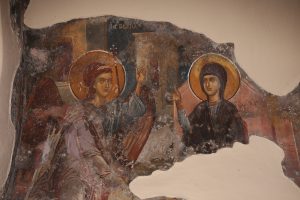
The earliest fresco cycle of the Acathist Hymn—depicting the stanzas (Oikoi) corresponding to the letters Alpha through Omega—dates to 1296 and is preserved at the Monastery of Panagia Olympiotissa in Elassona. The iconographer began in the outer narthex of the old katholikon (main church), painting the 24 stanzas. Unfortunately, the ravages of time have left us with only a few of them (see photo 5). One of the best-preserved examples of Acathist iconography is found in the katholikon of the Monastery of Saint Demetrios (Markov Monastery) outside the city of Skopje (see photo 6).
The painter of the Palaiologan era depicts the chanters wearing skiadia (broad-brimmed hats) and the clergy bareheaded within the letters Y, Ψ, and Ω. The Acathist Hymn is also depicted on a 15th-century portable icon arranged as follows: the letter Δ (Dynamis Hypsistou / Power of the Most High) occupies the center of the icon, while the remaining 23 letters are arranged around it in a clockwise direction (see photo 7).
7. Akathist Hymn: A–O Ikoi, portable icon, Great Meteoron
In 1360, the entire Acathist Hymn was depicted for the first time—specifically, the Ti Ypermaho (To the Champion Leader) as the central theme, flanked by the twenty-four Oikoi (stanzas). In the Ti Ypermaho scene, the painter depicts the Siege of Constantinople in 626, showing Patriarch Sergius carrying the icon of the Virgin Mary along the walls accompanied by the people, while the boats of the Avars and Persians are being sunk by the turbulent sea. The only surviving example is found on the island of Golem Grad in Lake Prespa—territory that was Greek until 1914, when it was ceded by the Greek King Alexander to his Serbian counterpart Peter, and which is today part of North Macedonia. This depiction—the only one to have survived—is worn, as the artist painted it on the exterior wall of the katholikon (see photo 8).
8.Ti Ypermacho, fresco, katholikon of the Monastery of the Entrance of the Theotokos, Golem Grad
A second example of the To the Champion Leader (Ti Ypermaho) theme, associated with the Acathist Hymn, survives from two centuries later—dating to 1537—at the Moldovița Monastery (Moldavia); it depicts the Ottoman siege of the city of Suceava in 1527 (see photos 9 & 9A).
FROM “AKATHIST ANNUNCIATION” → “COMMEMORATIVE TRILOGY”
To mark the 1400th anniversary of the salvation of the City on August 8, 626, a trilogy titled ACATHIST HYMN is being released as a commemorative edition.
Volume I, titled Angelos Protostatis—Mode Plagal 4, p. 155—contains the medieval hymns of the Annunciation drawn from the manuscript Sticherarion EBE 884 and the Heirmologion of Grottaferrata (stichera and heirmoi). These have been transcribed into the New Method by the author, in accordance with the transcription key established by musicologist Dr. Ioannis Arvanitis. My apprenticeship under Ioannis Arvanitis began in 2012, focusing on the study of the old notation system, its transcription into the New Method, and its performance. In Volume II, we print the transcriptions of the stichera for the Feast of the Annunciation from the manuscripts of Chourmouzios Chartophylax (†1840)—Chourmouzios did not transcribe heirmoi—precisely to demonstrate, to both the open-minded researcher and the skeptical musicologist, how Arvanitis’s “Key” (Kleida) approaches the primordial medieval echos of 1400—thereby validating his method—while also reflecting the aural character of Chourmouzios’s slow-tempo transcriptions, which captured the soundscape of 1800. Professor Arvanitis transcribed the Ti Ypermaho and Angelos Protostatis from the Psaltikon manuscript—representing the 12th-century tradition of the Monastery of Grottaferrata. The entire first volume has been performed by the Romeiko ensemble under the direction of the author; this performance was captured in a three-hour digital audio recording and filmed during the concert held on May 18, 2018.
Volume II, titled Psallontes sou ton Tokon (Chanting to Thee the Hymn of Thy Birth)—Plagal Fourth Mode and spanning 400 pages—is a work I compiled myself, gathering rare depictions of the Annunciation and the Acathist Hymn from frescoes, wall paintings, mosaics, portable icons, woodcarvings, ivory carvings, vestments, and musical manuscripts. My journey to photograph all this material personally—amidst countless bureaucratic hurdles—took me from the Catacomb of Priscilla in Rome to Palermo, Cyprus, Crete, Prespes, Daphni, Meteora, Lake Ioannina, Skopje, Ohrid, Kosovo, Kurbinovo, Kastoria, Grevena, Romania, Cappadocia, Poreč, Madrid, Mytilene, and the Chora Church (Kariye Mosque).
Volume III, titled Dynamis Hypsistou, Mode Plagal 4 (200 pages), is a collection of theological, liturgical, musicological, and historical articles concerning the Annunciation and the Acathist Hymn. Contributors include Fr. Maximos Lavriotis, Manolis Theodorakis, Ioannis Arvanitis, and the author. This volume contains all the poetic texts chanted in the three hours of recorded material.
The trilogy is a bilingual edition (Greek & English); the three volumes are housed in a wooden presentation box featuring the “Angel of Kurbinovo” (1160AD) on the lid—rendered in a choice of Plexiglass print, mosaic, icon, or wood carving (see photos 10 & 11). The box includes a silver bookmark, cast in pure silver and hand-engraved by the author.
=================
MORE PHOTOS
10. AKATHIST TRILOGY in a wooden box
11. AKATHIST TRILOGY with icon painting, woodcarving, mosaic