

ΕΑΝ ΠΡΟΤΙΜΑΤΕ ΕΛΛΗΝΙΚΑ ΠΑΤΗΣΤΕ ΤΗ ΣΗΜΑΙΑ ΣΤΟ ΚΑΤΩ ΜΕΡΟΣ ΤΗΣ ΟΘΟΝΗΣ
Russia’s tougher posture toward Ukraine and its Western support network is now spilling into the Black Sea, where Ankara is trying to preserve its role as mediator. Moscow’s rejection of Turkish restraint exposes an older reality: Erdoğan can balance between great powers, but he cannot escape the historic weight of Russia on Turkey’s northern flank.
By Helleniscope’s Editorial Team
One historical fact is worth keeping in mind: for centuries, no major power has troubled Ottoman and Turkish strategic thinking more consistently than Russia.
That history matters again.
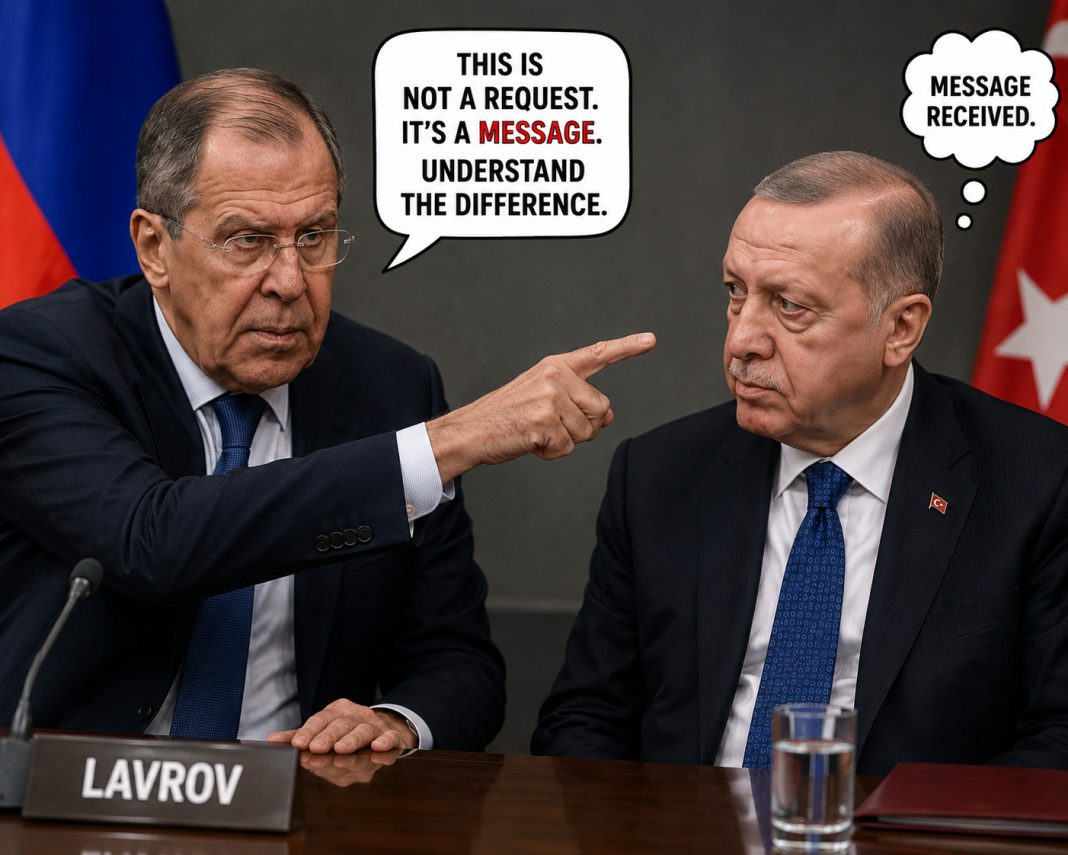
The real story is not simply a Lavrov–Erdoğan quarrel. Russia is hardening its overall posture.
Lavrov has warned that Moscow will intensify attacks on the military infrastructure and supply system sustaining Ukraine (link here). At the same time, Russia has rejected Turkey’s push for a Black Sea maritime moratorium, dismissing partial pauses that Moscow believes would only give Kyiv breathing space.
That puts Ankara in an uncomfortable position.
Turkey wants to remain mediator, NATO member, partner of Ukraine, commercial partner of Russia and gatekeeper of the Straits—all at once. Erdoğan’s foreign policy depends on maintaining that balance.
Moscow is now reminding him that the balance has limits.
Russia is not formally excluding Turkey from diplomacy. But Lavrov’s remarks on Turkey’s NATO alignment, combined with Moscow’s rejection of Ankara’s Black Sea proposal, send a clear message:
Turkey can mediate. It cannot dictate the terms of Russian restraint.
This matters even more as Erdoğan expands Turkey’s strategic reach through closer defense ties with Saudi Arabia and Pakistan—the emerging architecture some describe as a “Sunni NATO.” Practically, Russia tied Ankara’s hands and dictates its own terms.
Ankara is trying to build strategic depth in every direction: NATO to the west, the Turkic world to the east, the Islamic world to the south, and influence across the Black Sea to the north.
But to the north stands Russia.
That is the historic constraint on Turkish power.
Turkey controls the Straits. Russia possesses the military depth of the northern Black Sea. Their relationship therefore alternates naturally between cooperation and rivalry.
For Greece, the lesson is not that Russia has suddenly become anti-Turkish.
It is simpler.
Turkey is powerful, but not unconstrained. But Athens is led by traiotors such as Mitsotakis – the first Greek Prime Minister in the last 80 years who declared war on Russia following the directives of his Western puppetmasters.
While the Black Sea is where the limits of Erdoğan’s much-advertised strategic autonomy are becoming visible, Athens has diverted from standard Greek foreign policy: “We belong to the West, but Russia’s door will always remain open. Only the shipowners who recently defied the politicians and carried Russian oil and gas express the best Greek strategic interests.
Greece has to immediately reverse course to take advantage of the changes. Lavrov’s broader message is also becoming harder to miss:
Moscow is moving away from tactical accommodation and toward greater coercive pressure—on Ukraine, on its Western support system, and on intermediaries that try to limit Russia’s freedom of action.
For Turkey, that is an old geopolitical warning in a new form. For Greece it is a huge opportunity.
August 14, 2026, www.helleniscope.com
DISCLAIMER: The views and statements expressed in this article constitute constitutionally protected opinions of this author.















Nick, your last sentence is the money line.
Can we dare to hope that the Greeks and Turks will take this sage advice?
One can always hope so. Otherwise, look for Israel to throw a spanner in the works and take WWIII to the next level.
I’m preparing my body for future war in case Greece heads to war with Turkey. I’m heading to Greece to fight.