
ΕΑΝ ΠΡΟΤΙΜΑΤΕ ΕΛΛΗΝΙΚΑ ΠΑΤΗΣΤΕ ΤΗ ΣΗΜΑΙΑ ΣΤΟ ΚΑΤΩ ΜΕΡΟΣ ΤΗΣ ΟΘΟΝΗΣ
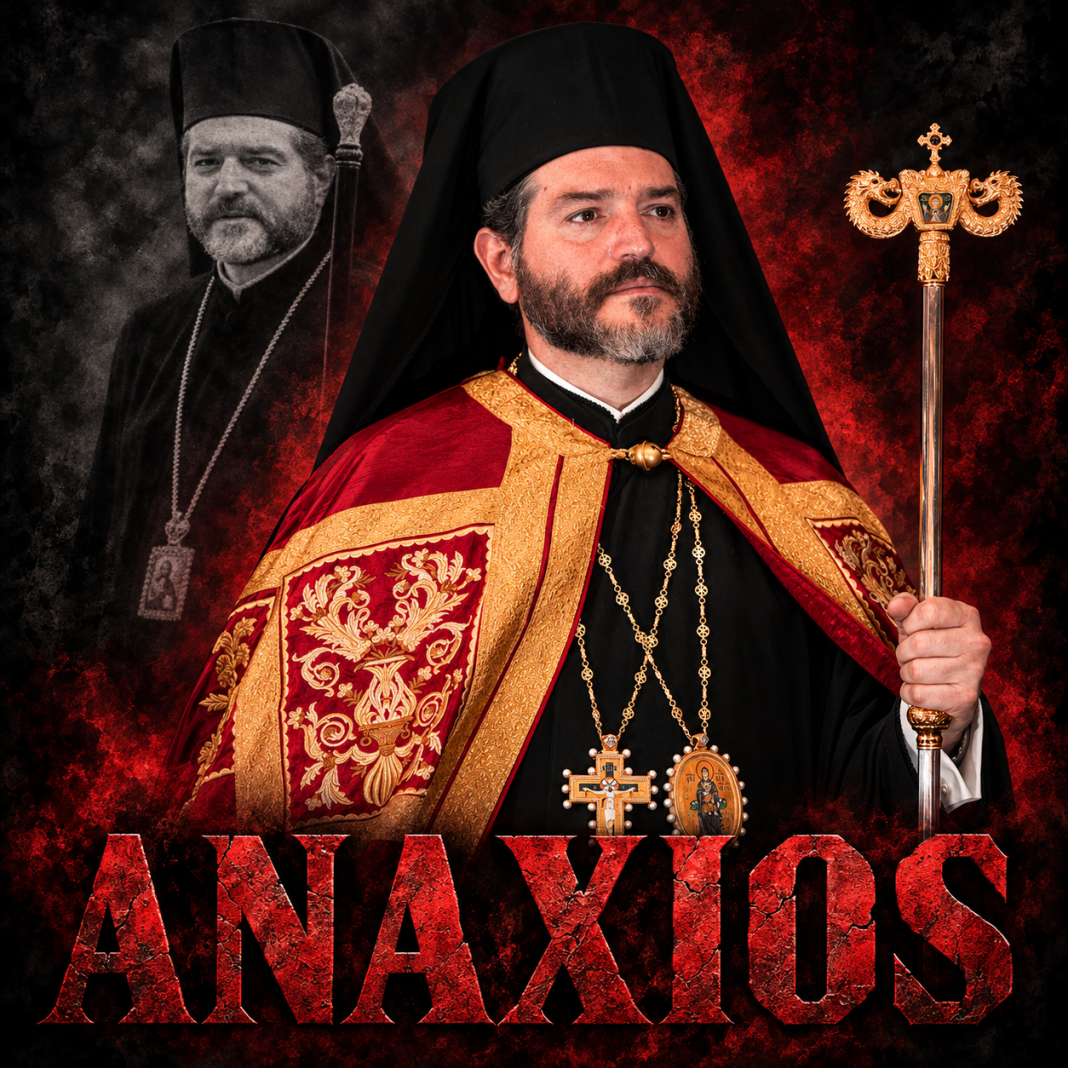
PHOTO: An artistic rendition of Apostolos (Koufalakis).
By Nick Stamatakis
Unanswered allegations, ecclesiastical patronage, and a hierarchy too often seen as protecting its own have turned this enthronement into a test of Orthodox accountability. The ancient cry of “Anaxios” remains the faithful’s refusal to surrender conscience to secrecy, favoritism, and predetermined decisions. A hierarchy may appoint a bishop, but it cannot manufacture worthiness—or the faithful’s consent.
“Axios!”—“Worthy!”—is not ecclesiastical applause. It is the surviving voice of an ancient Church in which the faithful were not merely spectators while bishops were imposed upon them. The Apostolic Constitutions describe a bishop as one chosen with the people’s participation, whose worthiness was publicly examined and received, while Orthodox ordination still preserves that ecclesial assent in the cry Axios.
The corresponding “Anaxios”—“Unworthy” is therefore not theatrical insolence, but the refusal of the faithful to counterfeit consent when conscience forbids it. Its canonical consequences have varied across the centuries, but its meaning remains unmistakable: the people of God are not furniture, and Axios is supposed to mean something.
On September 19, Apostolos Koufalakis is scheduled to be enthroned as Archbishop of Canada at St. Nicholas Cathedral in Toronto. Before anyone expects an automatic cry of Axios, however, the faithful have every right to examine the public record surrounding the man being placed over them.
That record includes serious, longstanding controversies:
- The National Herald reported in 2014 (link here) that Archbishop Demetrios had resisted Apostolos’s elevation because of his connections to figures in the St. Irene Chrysovalantou scandal, while also reporting that Metropolitan Nikitas said Apostolos himself had not been found at fault.
- In 2015, The National Herald reported (link here) that Metropolitan Gerasimos sought his removal as chancellor amid complaints about performance and alleged insubordination.
- That report also stated (link here) that Patriarch Bartholomew had pressured Archbishop Demetrios to elevate Apostolos despite earlier resistance.
- Helleniscope has published allegations link here concerning serious ethical and sexual misconduct during Apostolos’s Astoria years; these remain allegations, not adjudicated findings.
- Helleniscope has also alleged (link here) financial improprieties involving Apostolos in the United States and Greece, again without an adjudicated finding establishing them.
- A later National Herald report republished by OCL (link here) raised further questions about the machinery surrounding his advancement and whether episcopal support for his promotion had been overstated.
None of this means accusation equals guilt. Christianity allows not merely forgiveness but radical transformation; sinners repent, lives change, and grace restores. But please show me ONE INSTANCE where Apostolos showed repentance!! JUST ONE!! Repentance is not silence, forgiveness is not institutional amnesia, and promotion is not absolution. Not only has he shown no public sign of repentance, but he has continued to conduct himself with the posture of moral superiority—as though the unanswered accusations surrounding him were beneath acknowledgment. That is not humility, not accountability, and certainly not the conduct the faithful should be expected to acclaim as worthy of an Orthodox hierarch.
Where is the public reckoning? Where is the clear answer to accusations that have followed him for years—or, where wrongdoing occurred, the repentance, restitution, and change? In the public record discussed above, it is conspicuously absent.
And that makes this larger than Apostolos. It exposes a leadership culture that demands accountability from below while insulating power above: priests and laypeople can be disciplined, transferred, or marginalized, while favored hierarchs pass through controversy protected by secrecy, connections, and institutional loyalty.
Critics call this Phanariot culture the “Brotherhood” – an ecclesiastical circle in which insiders appear to advance and protect insiders while the faithful are handed decisions already made and expected to bless them afterward. Whether one accepts that label or not, the perception itself is devastating.
Corruption does not require envelopes of cash. It can be favoritism turned into governance, serious questions buried by time, procedures used to manufacture consensus and promotion substituted for accountability. It becomes especially corrosive when the very men benefiting from such a system preach humility, obedience and tradition to everyone beneath them.
That is how Axios is hollowed out. What should express the Church’s reception becomes a stage direction: stand, bow, sing—and pronounce him “worthy.”
That is not meaningful consent. It is ceremonial compliance.
And the damage extends beyond one Archbishop. Every unexplained promotion deepens the suspicion that connections matter more than character; every unanswered controversy weakens trust in the episcopacy; every appeal to obedience without transparency drives the faithful further toward cynicism.
So ANAXIOS does not deny redemption. It demands that repentance, truth, and accountability actually mean something.
Worthiness cannot be manufactured from above.
If Axios merely means the Synod has already decided, the faithful are not being asked for assent. They are being handed a script.
Orthodox tradition gave them a voice for a reason.
And in the case of Apostolos, this voice clearly says:
ANAXIOS.
September 18, 2026, www.helleniscope.com, n.stamatakis@aol.com
DISCLAIMER: The views and statements expressed in this article constitute constitutionally protected opinions of this author.