

ΕΑΝ ΠΡΟΤΙΜΑΤΕ ΕΛΛΗΝΙΚΑ ΠΑΤΗΣΤΕ ΤΗ ΣΗΜΑΙΑ ΣΤΟ ΚΑΤΩ ΜΕΡΟΣ ΤΗΣ ΟΘΟΝΗΣ
Opposition to automated surveillance is becoming one of several unlikely points of convergence between parts of the political right and left. From war and foreign policy to free speech and privacy, these coalitions may signal a broader revolt against institutions increasingly viewed as distant, unaccountable, and too powerful. Are we in the first stages of a popular revolt?
By Helleniscope’s Editorial Team
Other issues have begun, in unexpected ways, to bring substantial parts of the American right and left onto common ground, including a widening war-weariness over the conflicts in Ukraine and Iran, even though the constituencies and reasons for that opposition differ substantially, as well as growing resistance to the idea that criticism of Israel, hostility toward the Israeli government, or opposition to its military policies should automatically be treated as antisemitism, a distinction that has become increasingly important as American attitudes toward Israel’s government have deteriorated across party lines and congressional battles over Israel-related boycotts have turned into arguments about the boundaries between combating discrimination and protecting political speech.
Yet the fervent reaction to Flock Safety’s license-plate cameras may offer an even clearer glimpse of the politics of the near future, because here the convergence is not occurring around some distant battlefield or ideological abstraction but around something citizens can suddenly see on the road outside their homes: a technological system quietly accumulating information about where they go, when they go there and, potentially, who can later search that history.
The backlash has crossed boundaries that normally organize American politics, with liberal Asheville, North Carolina, and conservative Oconee County, South Carolina, both abandoning Flock contracts, while opposition has spread through municipalities and state governments as activists on the left warn about surveillance of immigrants and protesters and activists on the right invoke the Fourth Amendment, government overreach and the presumption that Americans should be left alone unless there is a particularized reason to investigate them. The cameras unquestionably have a public-safety case behind them, and police departments credit automated plate readers with helping locate stolen cars, suspects and missing people, but that is precisely why the controversy matters: technologies of social control rarely arrive announcing themselves as instruments of social control, because they arrive as conveniences, efficiencies and solutions to real problems, only later forcing the public to decide how much invisible power it was willing to create in exchange.
For years, figures from very different ideological traditions have predicted some form of popular revolt against political, corporate and institutional elites, predictions that were often so sweeping that almost any election or protest could be recruited as evidence, but the Flock reaction is more interesting because it is concrete, decentralized and resistant to ordinary partisan management. A Reuters/Ipsos survey this month found opposition to the cameras exceeding support nationally, while state and local governments have begun restricting deployments and reconsidering contracts.
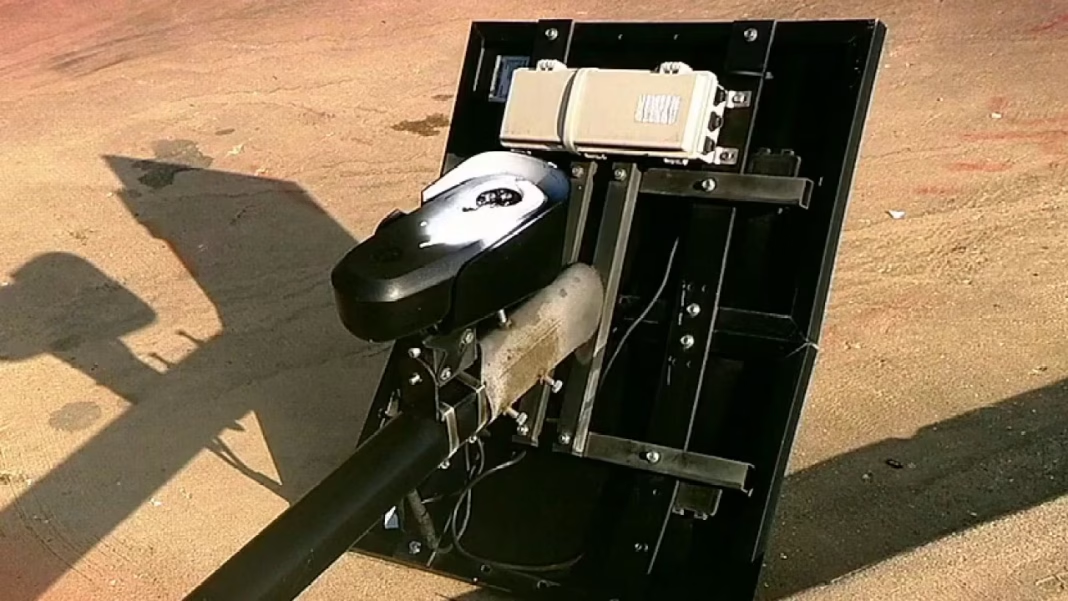
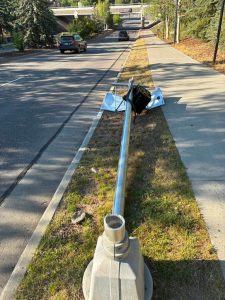
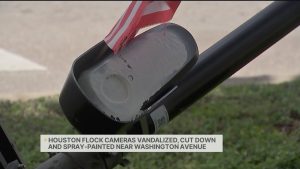
More ominous, and perhaps more revealing, is the fact that opposition has begun to move beyond petitions, lawsuits and angry town-hall meetings into direct attacks on the surveillance infrastructure itself, with Flock cameras shot, smashed, spray-painted, deliberately obstructed and in some places cut from their poles, while videos of such acts circulate online and encourage a vigilante culture of resistance; the Washington Post has documented cameras being shot, painted and cut down, while the Guardian identified dozens of incidents across more than twenty states in which people damaged or destroyed the devices explicitly as a protest against surveillance.
Is this an early symptom of something larger that cannot yet be known, maybe a popular revolt against the Elites? Against a background of declining trust in government, corporations, and other powerful institutions, the spectacle of ordinary citizens physically tearing down surveillance equipment they believe was imposed without meaningful consent offers a striking image of what a broader populist revolt could eventually look like: not a coherent ideology of right or left, but an increasingly visceral refusal to accept technologies and institutions that people believe exercise power over them without their permission.