


ΕΑΝ ΠΡΟΤΙΜΑΤΕ ΕΛΛΗΝΙΚΑ ΠΑΤΗΣΤΕ ΤΗ ΣΗΜΑΙΑ ΣΤΟ ΚΑΤΩ ΜΕΡΟΣ ΤΗΣ ΟΘΟΝΗΣ
The Mihailo Appeal and the Reopening of an Old Ecclesiastical Fault Line
By Helleniscope’s Editorial Team
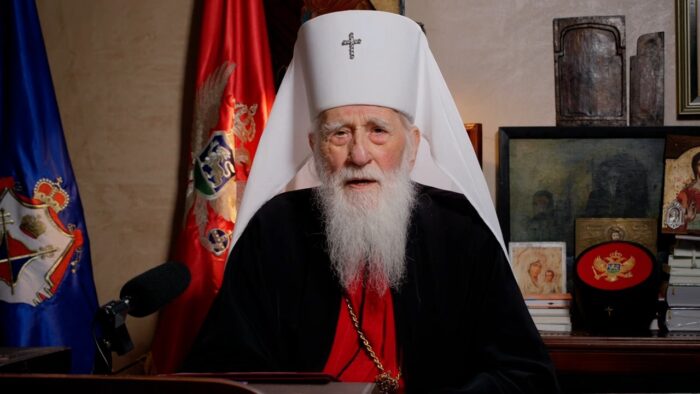
The long-dormant ecclesiastical dispute surrounding Montenegro has once again resurfaced, following a formal appeal by the schismatic cleric Mihailo (Miraš Dedeić) to the Ecumenical Patriarchate. The move has revived sensitive questions touching the canonical order of the Orthodox Church and, more specifically, the strained relationship between Constantinople and the Serbian Orthodox Church.
The Appeal to the Phanar
Two weeks ago, Mihailo—long defrocked and unrecognized by the Orthodox world—addressed a letter to Patriarch Bartholomew, requesting dialogue and a re-examination of his case. In the letter, he portrays himself not as a schismatic agitator, but as a hierarch unjustly condemned under Serbian ecclesiastical authority. He explicitly calls upon Constantinople to exercise what he describes as its historic prerogative to hear appeals and arbitrate disputes beyond local jurisdictions.
Mihailo’s appeal is framed in respectful language toward the Ecumenical Throne and includes overt political-ecclesiastical signals: praise for Constantinople’s recent interventions in Orthodox affairs and an offer to submit himself to a canonical review or synodal process under the Phanar.
The Serbian Church’s Position
For the Serbian Orthodox Church, the matter is settled and non-negotiable. Montenegro, from its perspective, remains a canonical territory of the Serbian Patriarchate through the Metropolitanate of Montenegro and the Littoral. The so-called Montenegrin Orthodox Church is viewed as a political creation of the post-Yugoslav era, devoid of apostolic succession and ecclesial legitimacy.
Belgrade sees Mihailo’s appeal not as a personal request for justice but as a strategic attempt to internationalize an issue that has already been judged canonically. Any engagement by Constantinople—even informal—risks being interpreted in Serbia as indirect interference in its internal ecclesiastical affairs.
Signals and Counter-Signals from Constantinople
Officially, senior hierarchs of the Ecumenical Patriarchate have denied any institutional contact with Montenegrin schismatic structures. These denials were meant to reassure both Serbia and other Orthodox Churches that no Ukrainian-style precedent is being contemplated in Montenegro.
Yet parallel developments have complicated the picture. Montenegrin schismatic representatives have appeared at international ecclesiastical events and have been photographed alongside hierarchs linked to Constantinople. While such encounters may be informal or ecumenical in nature, they have fueled speculation that channels of communication—if not negotiation—may be quietly open.
Why the Episode Matters
The Mihailo appeal has significance beyond its author. It reopens unresolved tensions over:
the scope of Constantinople’s appellate authority,
the limits of intervention in another Church’s canonical territory, and
The broader balance of power within the Orthodox world following recent schisms.
For Serbia, the concern is existential: recognition—explicit or implicit—of a Montenegrin church outside its jurisdiction would fracture its historical and pastoral presence in Montenegro. For Constantinople, the challenge lies in managing its role as a supranational arbiter without provoking further ruptures in Orthodox unity.
A Delicate Silence
As of now, the Ecumenical Patriarchate has issued no formal response to Mihailo’s appeal. That silence is itself telling. Any move—whether engagement or rejection—would reverberate well beyond Montenegro, shaping future relations between Constantinople and the Serbian Church.
What is clear is that the Montenegrin question, once thought marginal, has again become a prism through which deeper Orthodox divisions are refracted. The Mihailo episode is less about one schismatic cleric and more about how Orthodoxy negotiates authority, history, and unity in an increasingly fragmented ecclesiastical landscape.
January 31, 2026, n.stamatakis@aol.com www.helleniscope.com
DISCLAIMER: The views and statements expressed in this article constitute constitutionally protected opinions of this author.













Another political “church”, just like OCU. I hope Ptr. Barto will have some common sense this time and not grant autocephaly to the schismatics to prevent a disaster in Montenegro like the one he created in Ukraine.
Just more quackery. (Does the EP really want to tick off the Serbian Church? If they’re stupid enough to do so…that will just drive them deeper into Moscow’s camp.)