


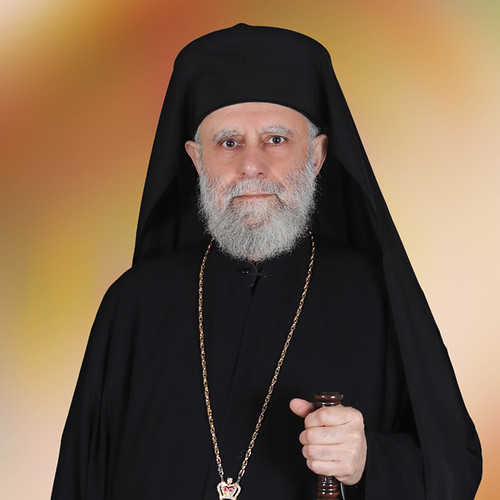
Presentation to the 14th Meeting of the Assembly of Canonical Orthodox Bishops of the United States of America
By His Eminence Metropolitan Saba Isper
Denver, Colorado
Friday, November 7, 2025
Introduction
For centuries, the New World has drawn successive waves of migration. In most of the twentieth century, there was a modest Orthodox presence that remained largely confined to Orthodox communities across North America, especially in the big cities. Orthodox immigrants established their churches in the midst of their residential clusters and preserved their faith as best they could at that time. With the organization of church life in North America, the expansion of immigration after the Second World War, and the birth of new generations within American culture, Orthodoxy came to be known as an Eastern Church—a church of immigrants and ethnic communities: “Greeks,” “Slavs,” “Syrians,” etc.—rather than by their apostolic faith.
However, the changes that took place in Western society in general, and among American Christians in particular, pushed some to search for the original roots of Christianity. They discovered that “the faith once delivered to the saints” (Jude 1:3) had been preserved in the Orthodox Church, and they turned to it. Thus began the first large wave of converts—at least in the Antiochian Church—in the 1980s. These new Orthodox took upon themselves the task of evangelizing the Orthodox faith in the land, and their children and grandchildren were raised Orthodox.
By the end of the twentieth century, we almost thought that the century of immigration for Orthodox Christians in America had ended and that the century of evangelization had begun. Yet the collapse of the communist world in the early 1990s quickly brought a renewed flow of immigration from Eastern Europe, and the economic problems that have continued to plague Greece prompted the continued flow of Greeks to America. Two decades later came what was called the Arab Spring, which sent many Middle Eastern Orthodox to North America as well. Today, it seems as though we are returning to the first century A.D., when new believers left Jerusalem because of persecution and the Gospel spread throughout the oikoumene (inhabited world).
The growth of the conversion movement, for various reasons, contributed to making Orthodoxy a known religion in North America; indeed, it is now witnessing accelerated growth—some have even called it a flood. To put it mildly, we were no longer, as my predecessor Metropolitan Philip, of thrice-blessed memory once called us, “the best kept secret in America.”
His Eminence Metropolitan Saba delivers his presentation “On Converts to Orthodoxy”
Motives for Conversion
There is no doubt that the abundance and variety of Protestant churches, and their differences from one another, are one reason many Protestants seek the authentic Church. There is a palpable hunger for Christian authenticity in America.
Over the last five centuries, Protestantism has developed its own “tradition” while at the same time rejecting the fullness of Holy Tradition. Today, however, many ask how they can accept a Protestant tradition that began with Luther’s movement and grew and developed to the present day, yet reject the Tradition that goes back to the beginning of Christianity.
As for the rootlessness that has prevailed in many Evangelical settings, it remains the greatest driver for those seeking a firm, unchanging faith—for “the faith once delivered to the saints.” These motives apply especially to those coming to Orthodoxy from Evangelical backgrounds. But there are also other Christians, atheists, non-religious people, and followers of other religions who are drawn by the beauty of Orthodox worship and its sacred arts—iconography and church music—into the spiritual world for which they thirst. Many find in the spirituality of the Orthodox Church both accountability and discipline amid the decadence and compartmentalization of contemporary life.
Social media also plays a large role in introducing American society to Orthodoxy, prompting many to look for the nearest Orthodox church and become acquainted with it.
Because Orthodoxy was, in the past century, a church of ethnic communities, it drew the attention of many non-Orthodox to certain beauties of the cultures Orthodox Christians brought from their countries of origin—family life, hospitality, friendship, community, cuisine, and the like. Many of our priests also observe that Orthodoxy’s resistance to a commercial spirit gives it credibility in a world where faith has become a consumer commodity, while the blood of our many and recent martyrs gives it further credibility. There is no relativism in Orthodoxy, nor populist, emotional mass appeal.
In short, as one of the priests who responded to a survey I circulated put it regarding this century: “The century of the ‘church of immigrants’ has ended; the century of evangelization has begun. Orthodoxy’s mission is no longer primarily geographical (from Antioch to America) but existential.”
The Youth Awakening
Speaking about conversion requires pausing to consider youth. The phenomenon of young people, ages roughly 15-30, coming to Orthodoxy has become very clear in many churches. For example, in New York—where previous waves of conversion were not known—you will find today in our Antiochian cathedral in Brooklyn more than fifty university-age catechumens or very recent converts of every race and religious background—or even of no religious background at all.
It is also notable that many young men with little prior contact with Christianity are drawn to the order, hierarchy, and seriousness they find in Orthodoxy. Young people in general summarize the reason for their choice of Orthodoxy in these words: “We were looking for a real spiritual life, and we found it in Orthodoxy.” Before Orthodoxy became more widely known, many of these same people would leave rationalistic Western Christianity for Eastern religions, seeking that very spirituality in religions like Hinduism and Buddhism—not knowing that authentic spirituality already existed in Eastern Christianity.
Youth admire the authenticity, dignity, and spirituality they find in Orthodoxy. They discover an ascetic and moral seriousness that offers them an alternative to the relativistic, fragmented culture they experience in society. In addition, many young Americans now long for Christian community and seek it in traditional churches. It is no exaggeration to say that mysticism is what most strongly draws them to Orthodoxy: they are captivated by the mystery they experience—whether in the various liturgical services or in the sacred arts such as architecture, icons, and music. Any visitor to Orthodox monasteries in America will notice the abundance of monks and nuns who are themselves young.
Their model is holiness and the Church as a eucharistic communion in which they find the family they have missed. They are tired of ideology; they seek holiness, serious faith, and love. They do not want a faith that is merely reactionary, nor a lax religion. Their seriousness can push them toward rigidity and extremism if they do not have mature and balanced spiritual fathers. The same internet that plays a positive role in introducing them to Orthodoxy also plays a negative role if they encounter rigid and fundamentalist Orthodox preachers. Despite the existence of extremism, they remain in the Church because of the peace they feel there. They accept rules and boundaries that heal them, while at the same time rejecting other rules that they think shackle them and block their freedom. Accompanying these young people shows how great their need is for genuine, pure discipleship.
Difficulties of Converts
Perhaps the first difficulty lies in the lack of follow-up and personal discipleship, which are not always available. Many cradle Orthodox welcome converts joyfully but do not make the required effort to disciple them and provide the spiritual care they need, or they become indifferent to this responsibility and caught up in their own cares.
The truth is that the Orthodox world in general lived for centuries under persecution, which made the preservation of the faith and the continuity of Orthodox existence the priority overshadowing all else. The prohibition of Christian evangelization under threat of death made mission entirely forgotten; thus, many Orthodox lost the experience of dealing with converts, since they were unable to evangelize for centuries and forgot that great task. Their indifference to evangelization was further deepened in America by living for a long time as ethnic-community churches.
From the 1980s onward, they began to see the new conversion movement, which began by the Holy Spirit—not by cradle Orthodox themselves. But the conflation of the social culture they carried from their homelands with their Orthodox faith did not sufficiently equip them to care for new converts and help them acquire the Orthodox mind or phronema.
Here lies perhaps the greatest difficulty converts face. Acquiring the Orthodox way of thinking does not come from books but from life in the Holy Spirit, and this requires long-term rootedness in Orthodoxy. The Orthodox Faith is not an idea but a lived experience of repentance and communion with God. There is a danger that Orthodoxy becomes an ideology. Conversion to Orthodoxy is not so much an event as a journey and a process. Converts need accompaniment after receiving baptism or chrismation.
A decline of zeal is also noticed in some after an initial period of great enthusiasm.
There are cases of extremism and fundamentalism, and a tendency toward narrow legalism and a kind of theological intellectualism here and there.
Many who are coming to the Church today are psychologically, emotionally, or socially wounded, which requires experienced and mature spiritual fathers and mothers. All patristic teaching is based on the Church as a spiritual hospital that heals people from the consequences of their passions. A great task faces Orthodox Christians in America: transforming the Church from a club or religious association into a eucharistic community that heals through the mysteries (sacraments), spiritual care, and love.
It is difficult to form an American Orthodox community because of the dominance of individualism, the reality that believers do not live clustered around the church in one neighborhood, and the drain of human energy from working long hours that leave little room for gatherings outside Sunday. These factors have not yet helped to crystallize an American Orthodoxy. Meanwhile, immigrant believers still mix their social culture with Orthodoxy in ways that do not help converts distinguish what is authentic ecclesial tradition from what is merely social custom.
What makes things harder for converts is that Orthodoxy is a way of life more than a set of doctrinal rules and moral codes. Being thus, it rests on personal discipleship, which itself requires spiritually mature people and serious, patient accompaniment of new believers for a period of time. There is a pressing need here to translate doctrine into pastoral care—another very delicate task. Orthodox ethics are not merely principles and rules but a practical reflection of faith that appears in the believer’s conduct and character.
As I mentioned earlier, alongside the positive face of the internet that introduces many to Orthodoxy, there is a negative face in that people encounter an Orthodoxy that is not always authoritative or theologically sound. The open space allows anyone to speak about anything. Fundamentalism, in its negative, rigid sense, has also increased because of much that is available online—to the point that some have labeled it “internet fundamentalism” and consider it a new heresy.
We must remember that the Church has honored only three saints with the title “Theologian.” As Presbytera Eugenia Constantinou writes in her book Thinking Orthodox: “The Fathers of the Church frequently warned against the practice of dabbling in theology as an occasional pastime, attempting to discuss matters beyond one’s actual abilities. Amazingly, those whom the Fathers were admonishing against theological dabbling were not necessarily people living in the world, with secular careers, jobs, and families, as most dabblers are today. St. Gregory the Theologian sometimes refused to discuss theology with his own bishops! St. Symeon the New Theologian sharply criticized both monks and clergy for discussing theological matters about which they had no real experience. If such warnings can be issued to monks, priests, and bishops, how foolish it is for the rest of us to dabble in theology.”
Impact of the Increasing Influx
Most Orthodox churches in North America have seen increased attendance, especially after the Covid pandemic. Some observers liken this influx to a flood—and the comparison is accurate. I do not visit a parish without meeting catechumens there; in some parishes, they number more than one hundred. This raises a very serious question about the Church’s ability to receive them, form them properly, and provide spiritual accompaniment.
While many long-standing believers see in the converts a source of renewal and vitality—and a spur to discover their own Orthodoxy personally and deeply, not merely as a social religious tradition—many also feel somewhat threatened by the cultural changes occurring in their parish.
Many converts bring energy, zeal, and often deep theological literacy. But their rapid influx brings other problems: lack of space, insufficient catechetical training, increased pressure on priests—some describe themselves as burned out—lack of enough sponsors and lay mentors, and a shortage of authentic, lived Christian education.
There are no serious departments dedicated to preparing new believers, and to accompanying them spiritually as required. Various reasons bring new converts to the Orthodox Church, but rarely is it due to the Church’s deliberate work to introduce them to Orthodoxy. Some inquirers and converts feel alienated because they have not integrated sufficiently into the parish; others do not sustain their initial enthusiasm because they were not spiritually nourished in a way that preserves them; still others cling to their backgrounds in a way that is Orthodox outwardly more than inwardly. In some parishes that do not use English, converts find it very difficult to follow the services.
This influx requires more priests, deacons, and laypeople capable of serving newcomers—and this is precisely what most Orthodox churches lack. There is a growing number of priests exhausted by the increased workload. Even before this influx, we were struggling to recruit enough new priests to replace those who retire. Now the challenge is much greater: we need many more clergy and hundreds more parishes to accommodate all those who wish to join the Orthodox Church. Some of our church buildings are so full on Sundays that they exceed the fire code, and parking lots cannot fit any more cars. How many inquirers have turned around and left because they could not fit into the temple? How many of our existing faithful have been neglected because their priest must now ration his time and pastoral care? And how many clergy marriages and families are strained under this pressure? We must respond to this urgent challenge both prudently and swiftly, recognizing it as not only a problem but also a great opportunity.
Acquiring the Orthodox Mind
Many priests pose the fundamental question: how do we help converts acquire the Orthodox mindset? In baptism they become children of God and receive divine grace, but they need to grow in it. Neither teaching nor immersion alone suffices to acquire this mind. The principal question, therefore, is: what is required of the Church in the face of this influx? This is what I hope we can discuss, so that we may reach a plan or a set of road markers for developing our pastoral and evangelistic service.
Teaching without practice produces converts who are easily fragile. True formation must join both knowledge and lived experience. Attendance at services, fasting, confession, serving others, reading Scripture and the lives of the saints, and having a personal prayer rule under the guidance of a spiritual father—these disciplines must be the foundation of parish life for all the faithful (new and old alike), rather than being replaced by programs or organizational activities.
The most important means is common prayer—frequent services, friendship, and times of instruction. Preparing qualified sponsors among the laity may play a role even more important than a classroom. Formation begins with the priest but does not end with him.
Catechesis, both introductory and specialized, must include all the fields of the Christian faith. In some parishes, dogma is stressed while life and ethics are neglected. The integration of both is essential. It is essential that all the people of God in a parish, together with their priest, take part in serving the converts. This requires planning and vision. Spiritual guidance is decisive: the quality of sponsors and godparents is often the determining factor in whether a convert remains engaged in the Church.
Some Difficulties that Hinder Evangelization
Most churches facing this wave of conversions suffer from a shortage of priests in general, and of priests who are specialized in evangelistic ministry in particular. Budgets sufficient for evangelization are also not available in most parishes. The absence of coordinated planning weakens or slows evangelistic work, since most missions rely on individual effort more than on an organized system. Evangelization departments, where they exist in archdioceses, are still insufficient, and the work remains based on individual rather than collective efforts.
The influx of increasing numbers makes church spaces insufficient and sometimes stirs grumbling among parishioners, which negatively affects newcomers. In this area, some parishes have begun to sponsor new missions that grow out of them, developing over time into independent parishes. The reality is that a healthy mission comes from a healthy parish.
At the same time, there is a danger that we rejoice in numbers and forget that conversion is a lifetime process of repentance, not numerical recruitment. We must be careful lest today’s converts become tomorrow’s apostates.
Useful Matters and General Notes
Many priests agree that providing a warm, family-like pastoral environment strengthens the sense of belonging to the Church as the living Body of Christ. It is also observed that converts grow quickly where they are known by name. Shared meals—especially Middle Eastern cuisine—play an encouraging role in fostering participation in parish life, as do collaborative work inside and outside the church building and praying together. Some parishes that organized a group specifically to welcome newcomers—whether visitors or catechumens—found great success in later receiving them as full parish members.
Forming a personal relationship with newcomers greatly eases their integration, whereas bureaucracy of parish entry discourages the enthusiasm that first drew them to the parish. Orthodoxy is deeply relational—the only true incarnational experience in humanity. If we cannot offer personal relationships that lead others to Christ, then no one can.
Some who labor in this field prefer that the catechumenate not be less than one year, while others suggest two years.
There remains a lack of clarity and consensus about modes of reception, especially given the many variations we encounter among those coming from Protestant churches that either do not recognize baptism, or whose “baptism” occurred in a questionable way, or by so-called pseudo-churches.
There is a great need for pastoral and spiritual guidance training. Orthodoxy is not only a system of doctrinal ideology but a doctrine incarnated in life. Priests working in evangelization need support, opportunities for mutual learning, and spiritual gatherings specific to them. Catechumens and new converts need regional spiritual retreats that help them enter the heart of Orthodoxy.
It goes without saying that we must use the language spoken by the catechumens. Generally, this is English, but we have begun to need Spanish as well, with some inquirers either coming from Latin America or who need catechetical and liturgical materials in their native tongue to better understand Orthodoxy. There is also a growing need to minister intentionally to the African-American faithful and catechumens now increasingly present in our communities. In several parishes, there is an urgent need for balance in the use of languages, especially since the stream of migrants from other countries will never cease.
There is a great opportunity before the Orthodox Church in this evangelistic century. Converts are the first fruits of a broader evangelistic awakening. We need to receive them and prepare them well, and to strive to create an American Orthodoxy capable of taking root in a society to which Orthodoxy is not historically accustomed. This historic opportunity now places before the Orthodox Church a very sensitive task, confronting essential questions such as:
- How do we respond to the work of the Holy Spirit in creating a contemporary Orthodox culture able to communicate with, interact with, and influence modern Western societies?
- How can we protect Orthodox people in America from the policies of some Orthodox churches which, sadly, are currently in conflict among themselves?
- How can we—drawing on our rich theological, spiritual, and witness-bearing heritage—build an Orthodox testimony that begins with the needs of the American society in which we live, without denying our mother churches, especially those still undergoing tribulation and persecution?
- In the face of the spread of worldliness into the fabric of daily life, and American society’s turning away from its early Christian roots, how can we benefit from the experience of ongoing persecution in some of our mother churches to strengthen our Christian witness in the present age?
Conclusion
There is much to be said about contemporary conversion, and it needs extensive study, but reality places this challenge directly before us today, as those entrusted with shepherding the flock of Christ. It is a responsibility before God and history. We must cooperate so that each of us may be strengthened to fulfill it in the best possible way.
The hardships of history forced us, as Orthodox, to forget the basic commandment: “Go into all the world and proclaim the Gospel to all people” (Mark 16:15). But the Holy Spirit reminds us today that, in this blessed land, we now have the freedom and the means to accomplish what the Lord asked of us—what centuries of persecution prevented us from doing.
“Behold, now is the acceptable time,” (2 Cor. 6:2) says St. Paul. Let us not squander this moment of grace.










Orthodoxy is booming not only in America but in the West in general, I’ve seen similar numbers in Canada, UK, western Europe that don’t get talked about as much as the America converts. Even the larger Greek parishes in my state I know of have anywhere between 20-50 catechumens.
Many, many of these converts are of a Roman Catholic background who have come to Orthodoxy.
It is very interesting to note that while all of this is taking place Bartholomew is STILL trying to cozy up to the sinking ship of Roman Catholicism. He is incredibly out of touch with reality. Given that Elpidophoros is here in the States you have to wonder that he knows that the second Bartholomew communes or does anything overt with Rome that those converts will bolt out the door to another jurisdiction. Especially as he knows Orthodoxy is booming coming from what Met. Saba and I’m sure most other hierarchs said at the bishops meeting.
I believe that God has blessed us in the America and the West with all of these converts, even at Greek parishes, in order to prevent any type of Unia happening. Converts tend to be very zealous and I feel like they’ll put a stop to it.
Speaking as a former Roman Catholic who converted to Orthodoxy nearly 35 years ago: BELIEVE IT. I really don’t think either Bartholomew or Elpidophoros have any idea whatever of how many former Roman Catholics have sought safe harbor in Orthodoxy. There was one Sunday, pre-scamdemic, when I as choir director was in church setting up for Liturgy while Orthros was going on. Of those present – admittedly, not many – ALL were former Catholics, including the priest, the sexton, the cantor, and the choir director (me). All the churches in my area are under the EP, so I don’t know what we’ll all do if the EP goes through with his plans; we’ll just have to hope that a majority of parishes resist.
I don’t know if Orthodoxy in general is booming. Definitely GOA does not. It is the other denominations that are falling apart! All these churches that now have LGBTQ agenda, women priests etc. are losing their audience…
On the other hand GOA under the rule of the ecumenist Elpi is steadily losing its Greek audience. That explains why Elpi has such great relationship with the Protestants and the Catholics. They are the main source of the converts and he wants to cut his losses…
So, actually in GOA we have converts replacing the Greeks that are fleeing. You can hardly call that booming. It is something similar with the illegal immigrants replacing the population of Greece…
Newsflash: “Converts” to the “Orthodox Church” may eventually be found to be like “refugees” that leave California/New York and move to another state. They usually bring their failed ideologies with them; the ideologies that made life unlivable where they were prior.
With a clergy in such a sad state of inadequate/suspect education in true “orthodoxy”, the outlook is anything but “rosy”.
“He who stands for nothing, falls for anything.”
Antonis, am I to understand that you think it is better for individuals not to covert to Orthodoxy. Do you consider them better off in heterodox churches. My GOA parish has more non- Greek converts than cradle Greek Orthodox. Typically it is the converts who attend week day and special services and frequent the catechetical classes.
What is orthodoxy? Does sitting in a church pew numerous hours, like a mushroom, make one orthodox?
I think that it would be fitting for the clergy to speak out today, and vociferously, against our hierachs who ignore/defy Church Canon. Otherwise all else is garbage. From the EP to the entire GOAA, every church has “an elephant in the room”. And imo, it’s a big smelly elephant.
Christianity is not “archaic” and in need of “modernization” by inadequately educated narcissists. Quite the opposite: until all men of the cloth afford the profound respect the Teachings of the Church deserve for the inheritance of wisdom they have left us…..
(you can finish that thought yourself).
The might of the Ottoman Empire wasn’t as destructive/repressive as the current evil forces of political correctness, moral relativism, apathy, and ignorance that modern Man has accepted. And the GOAA seems to support. Remember they hired a PR firm!!!!!!!
And the Church seems powerless to counter those forces since it has crippled itself in HYPOCRISY. Because of whom we allow to represent/lead us. It does matter.
Antonis, I am confused. Is your post a response to my questions? If so, it is no response at all.
JK,
It appears to have misinterpreted what Antonis is getting at. The key quote to understand what Antonis is saying is “…They usually bring their failed ideologies with them”
The issue is about “quality of converts” and not “quantity of converts”.
We increasingly witness a “factory of conversions” at certain GOARCH parishes, where marginal or even questionable levels of Catechism are applied. Many of these individuals are “made Orthodox”, but subsequently seem to openly disagree with certain aspects of either Orthodox Patristic Tradition, or in worse cases, dogma itself. Phenomena of such “Orthodox converts” also attending Roman Catholic mass with their children (and many similar “Ecumenical” actions incompatible with Traditional Patristic Orthodox “phronema”) are not as rare as one might think.
The results of “importing” (per Antonis) hoards of “luke-warm” converts who have not really “rejected Satan” (their previous heretical dogmas and beliefs) is tragic. The parish communities become diluted with the impossibility of achieving what the priest proclaims “..we pray for the UNITY OF THE FAITH…”, simply because clergy and bishops applied a “liberal policy” of opening the door to anyone, without verifying that they reject their prior convictions first, and not exercising a strict filter to only allow those who TRULY adopted Orthodox dogma in the door. They are so “liberal” that they allowed that guy Theophan to recite the Filioque at his ordination at the Phanar as his “confession of Faith”, and STILL continued with the proceedings to make him a bishop.
This dilution of the faith (via careless mass conversions) results in additional “Economy” year over year (partly because the one Protestant habit that the Archdiocese really enjoys from these converts is that of “tithing”…they are usually more “generous” with their annual support than the average Greek immigrant and their decedents – on average – and this may actually be a factor for the “liberal standards” for Conversions), and we now reach the despicable point of “innovation” – not Economy – where hierarchs want to allow dogs to attend services, elevating animals to a level above humans (given that the words of Liturgy state “let the Catechumans depart…let no Catechumen remain”, and implicitly now they add “…but it’s ok for the dogs to hang out…”)
…and many more examples like this.
Relaxation of our Tradition and Catechetical Standards by Orthodox clergy in order to maximize Conversions is not acceptable. A good Convert is one who is fervent about Orthodoxy, and has FULLY REJECTED his/her prior belief system. That’s what Antonis is alluding too, and he has a valid point.
Thank you Markos. I’ve grown very tired of picking nits as the Titanic sinks.
Wake me when Karloutsos, Elpidofthoros, and Bart the moulari are gone. As long the Church employs them, I won’t attend, it really ruins it for me. It’s as if we are mocking Christ.
It is not wise to invite guests to your home if it is in disrepair lest you give a bad impression. That is my primary objection to seeking converts. Al the Orthodox jurisdictions and patriarchates suffer from PTSD from centuries of mongol-muslim occupation so we need to repair ourselves. Converts require more effort since the majority come on a schizotypal wandering and soon move on to other faiths. Some of them come for political goals, both from the extreme right and left, and really don’t care about the subtleties of our theology. (Then again so do most of out ethnic cradle Orthodox.) Some of them really chose a parish for the parishioner friends and change church when they move, divorce or change jobs. Canards about booming orthodoxy are anecdotal and not grounded in measurable statistics. Divide the difference between baptisms and funerals by the growth rate (between .5% and 1%) to discover how small we really are.
We are not doing anything to seek converts; they are coming all on their own. My own parish has seen probably 50 baptisms for every funeral over the last 4 years.
No one is under any illusions that we are taking over America. But we may well exceed 1% of the population in the next 20 years.
How Orthodox are they after they convert? Have they truly “rejected Satan” by rejecting their prior dogmas, or are they secretly or openly harboring a heretical mindset? The main reason they are “coming on their own” is because other “faiths” have embraced woke alphabet soup (LGBTQ…) ideology, and many of these converts are people that are seeking the “true Christian alphabet”, the Alpha and the Omega of Scripture. That’s all well and good, but just because the Orthodox Church (Antiochian, and not so sure about GOARCH anymore) openly rejects all that LGBTQ propaganda, that does not constitute an automatic “basis for conversion”…
Proper Catechism is still important, and if these Catechumens have a problem with the “smallest iota” of Orthodoxy, they probably should not be allowed into the door until their mindset is corrected… this is not the time or place for an expansion of the discussion, but there is ample public evidence on the internet that even the Antiochians are “sacrificing quality for quantity” in several cases… I sadly predict that there will be a challenging schism in the future if the “Protestant enthusiasm” that certain converts are bringing to the table isn’t controlled by capable and wise Traditional Orthodox hierarchs…
How Orthodox are the “cradle” born? There’s no vetting of the parents or godparents for how Orthodox they are, despite the fact that their Church involvement is limited to Pascha and Panigeri (Easter and Festival). Why have we no concern for them? I can just imagine if a priest even tried: Mr. I’m-from-the-old-country-and-know-everything would be on the phone to the bishop the next day to shut the priest down. How may candidates for lay leadership positions who are in “good standing” have any metric applied regarding their adherence to the faith and sacramental engagement? No, only the converts do we want to strain at gnats to scrutinize.
Thank you. Great points.
My friend Fr Hovik a former Anglican priest switched to Eastern Orthodoxy + is now Antiochian Orthodox priest; he brought his family + his old entire parish to convert Orthodox too. Unprecedented!
Colorful Fr Hovik rides a horse in beautiful British Columbia.
Once a convert wakes up to the corruption of the leadership plaguing the Greek Orthodox Christian hierarchy, they run for the hills. The priests are obedient to this corrupt hierarchy. They do nothing to dismantle it.
The brainwashed sit in the pews taking Communion from the priests that do nothing to dismantle the corruption.
Ho hum.
Jane, you are so right. The brainwashed cradles sitting in the pews don’t even know the difference of a good priest/bishop from a heretical one. How are converts suppose to know the difference? It’s too much to teach them when they are trying to learn everything about our faith.
Conversions are happening bc that’s what God wills. His holy body, the Orthodox church, to be spread throughout the 4 corners of the earth. This is the great, new awakening.
People come to Orthodoxy because they feel the truth is here, minus Barto’s and Elpi’s etc contributions.
The rest of the “christian world” continues to deviate from the truth and is falling into abyss.
What is this? 4 men “married” into a couple? What?
https://spzh.eu/en/news/88983-in-germany-evangelical-pastor-marries-four-men-into-one-couple
I have never seen so many alleged cradle Orthodox act so doom-and-gloom amidst abundance. Some of them, like Antonis, are acting almost schizophrenic by going on tangents rather than replying to the reasonable questions asked of them. Others, like Lavrenty, advocate for hiding away like a puny ethnoreligion instead of fulfilling our Lord’s Great Commission because, as always, the Church has sinners in it. Finally, Jane claims all converts run for the hills when they see the sins of our hierarchs, when frankly in my experience they’re the most vociferous about dealing with theological corruption; Converts from Anglicanism for example are among the most vocal laity and clergy who are preventing the ordination of women to exclusively male orders. There’s a reason that corrupt hierarch Metropolitan Seraphim (Kykkotis) had to ordain a “female deacon” in the middle of Africa instead of the West, because in the West it would have boiled over against them.
The reality is that Orthodoxy has entered into the consciousness of the Anglophone world, that is, the largest portion of the West linguistically, and with that entrance the conversion of the western nations has begun (among others, as every nation in the world knows some English due to its nature as the global lingua franca). Some places will not see this conversion as strongly, and that is because of economy, ethno-geography, and, more seriously, a lack of compliance with the Holy Spirit. Those that are compliant, and especially those in the proper circumstances, are drawing hundreds and thousands. Billions must be baptized, ladies and gentlemen, and whining over gifts because they require effort to multiply is of no use to us. Don’t bury your talents, multiply them! :D
Don’t dilute the faith by bringing in folks that aren’t properly Catechized….
That’s the answer here.
Catechumens are always welcome, but until they FULLY reject every ounce of their prior beliefs, they must remain Catechumens.
Markos, you set an unreachable standard. Conversion of the heart and mind continues throughout life. Please read the book of Acts where there were multiple conversions without catechesis- Cournelius and the Ethiopian eunuch. The Holy Spirit fell on gentiles as Peter was preaching. Surely the thief on the cross received no catechesis. Conversion is primarily an act to the heart but conversion of the mind continues throughout life. You don’t have to be perfect to become Orthodox rather you come in humility accepting your brokenness.
Having said the above, effective catechesis is essential but the standard you present is unreasonable and unreachable. The church is a hospital for sinners both of the mind and the heart. It is better to have people within the hospital than outside.
What’s unreachable? The fact that Orthodoxy has certain dogmas, and we can’t afford to let people into the door who question even the slightest of them? Seems like a very simple set of equations to me.
A) Orthodox Faith & Beliefs = Orthodox Faith and Beliefs….
B) Partial, Mistaken, or Contrarian Faith & Beliefs do not equal Orthodox Faith and Beliefs…
So you don’t want to examine what these people think and believe? Are you so “humble” as to feel that you can snap your fingers and the Holy Spirit will descend at your beckoning call, just because you read the book of Acts? Congratulations on your “humility” then.
As for your examples, the Ethiopian eunuch didn’t know what he was talking about…And unfortunately we are full of “Ethiopian eunuchs” today, but many of the clergy are too weak (or perhaps too “liberal” themselves) to straighten them out…
Yet, the Ethiopian was baptized. Marcos you promote an Orthodoxy of the mind rather than an Orthodoxy of the heart. I affirm the witness of the scriptures in the book of Acts as an affirmation of God working in spite of catechesis.
Additionally, we would have to excommunicate most of the people in the pews using your litmus test of faith. There is no absolute unity of faith. Even many of the fathers held varying positions on dogma .
Whatever the catechetical standard is, the cradle-dox should have to meet it too. Why do they get a pass with no scrutiny when they pop in to church to be a godparent? Ditto parents. Not a concern about them and how they dilute the faith with their secular mindset, cultural Christianity, etc.?
Doom and gloom?
The priest at my large former parish (I’ve moved away) advised the attendees during a Holy Week service that he would offer Holy Communion, but asked all to please wait until the “Archons” in attendance received Communion first. Doesn’t that turn the Divine Liturgy of St John the Chrysostom into a sarcastic farce??
During the covid19 Scamdemic, the churches were locked shut and Holy Communion was handled like toxic waste when we reopened. Do you understand what we promise when we recite The Creed?
Abundance? Abundance of what? The GOAA is going extinct, because of its actions. And that’s not my “schizophrenic” opinion.
And how about that Charter the Archbishop unilaterally reneged on years ago? Guess he’s too busy posing for selfies.
I harbor doubts as to the waves of converts that the bishop is bragging about. I need raw numbers to be convinced that there is an increase. Those raw numbers should include the loss of older, cradle Orthodox.
Looking at my parish, many cradle Orthodox, are not regular church attendants any longer. Our stewardship rolls are barely keeping steady with previous years. And many of the paying “stewards” are one time payers, due to a wedding or baptism.
Moreover, the latest PEW research shows that Orthodoxy has not decreased at the rate it was decreasing previousaly, but there is no expansion of total numbers. Letr’s not forget that up to 2020, Orthodsoxy had lost more adgherents, proportionally, than other Christian denominations. Our percentage of all Christians is still at around 1% of the total. The bishop is looking at things from a bishop’s vantage point, which is mostly wishful thinking.
Additionally, more of the converts are drawn to Antiochian or Orthodox, or Russian churches, than to GOA, even though GOA has the biggest physical presence than other Orthodox churches, because they feel that they are more conservative and original, than GOA.
Yes, those guys at the top of our Church are acting like idiots. But may I ask you… what the other guys at the top of the other confessions do? I’ll tell you, it seems to me they are acting even worse! Yes tragically we have a woman deacon. But what do they have? Women priests, bishops and even archbishops and in some cases the woman bishops are also gay! So they still top us! Elpi baptized a child of a gay couple. Yes, but they do even worse! They marry 2 man, and when that doesn’t seem enough, why not marry more? How about… four? https://spzh.eu/en/news/88983-in-germany-evangelical-pastor-marries-four-men-into-one-couple
And for every orthodox priest that did things that he should not have done in Church, still nothing compares to this abomination: https://spzh.eu/en/news/89025-german-catholic-priest-conducts-a-halloween-service-dressed-as-dracula
Hmmm So yes, I have been very critical of Barto and Elpi but the converts will continue to come IMHO, because on the other side the grass is not greener, but it is brown and burned and dead because there is to living water to keep it alive… We must however guard our faith and make sure the union does not take place as long as the Catholics and the other confessions do not act according to the gospel. The union, if it will happen, will be the last betrayal. But have no doubt, there will be many that won’t join. It will just end in another schism.