
ΕΑΝ ΠΡΟΤΙΜΑΤΕ ΕΛΛΗΝΙΚΑ ΠΑΤΗΣΤΕ ΤΗ ΣΗΜΑΙΑ ΣΤΟ ΚΑΤΩ ΜΕΡΟΣ ΤΗΣ ΟΘΟΝΗΣ
Khamenei’s legacy is his stance on nuclear weapons. For years, he maintained that nuclear arms were forbidden under Islamic law and issued a religious ruling, or fatwa, declaring them “haram” or forbidden. How irrational to kill the one Islamic leader in Iran who had forbidden nuclear weapons!! But we all know now that this was NOT the Zionists’ real goal…
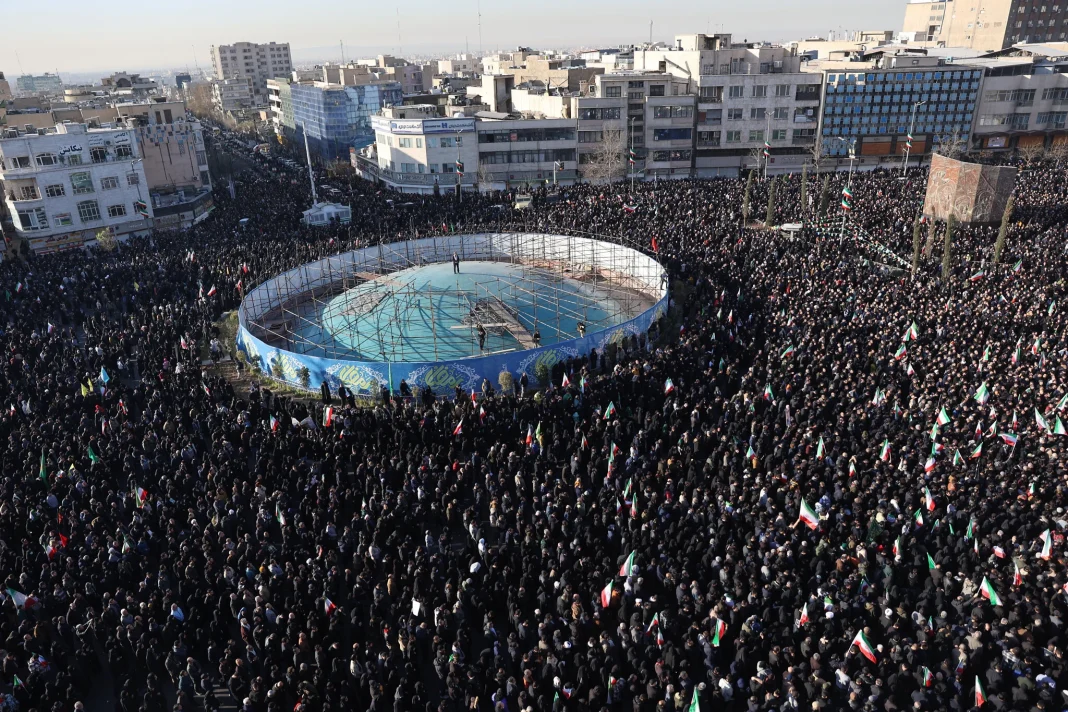
Tehran has witnessed one of the largest public gatherings in recent Iranian history as millions poured into the streets for the funeral of Iran’s Supreme Leader, Ayatollah Ali Khamenei. Processions stretched across the capital, with mourners filling major avenues and surrounding the Grand Mosalla prayer complex where the central ceremony was held. Across the country, mosques and public squares echoed with prayers, chants, and mourning rituals marking the death of a leader who dominated Iranian politics for more than three decades.
The scale of the turnout is striking. Massive funerals are not unusual in Iran, particularly when leaders are killed by foreign action. The country’s political culture—deeply influenced by Shi’a religious traditions—places strong emphasis on martyrdom. When a figure is framed as a martyr, religious networks, mosques, and civic organizations mobilize quickly, turning mourning into a powerful collective ritual.
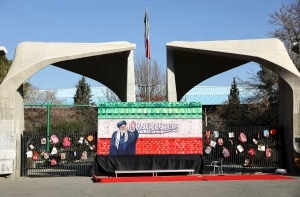
But there is also a political dimension. Iran’s government declared an extended period of national mourning, closed many institutions, and encouraged nationwide participation. In a country where the state and religious institutions are closely intertwined, such mobilization can bring enormous crowds into the streets.
For analysts, the key question is what these scenes actually mean for Iran’s internal politics.
On one level, the funeral reflects a classic “rally-around-the-flag” effect. When a country faces an external attack—especially the assassination of its top leader—public anger often shifts outward. Even citizens who oppose the government may temporarily unite in grief or nationalism when they perceive their country to be under attack.
It is a clear sign of national unity, although Iranian society remains politically diverse and often deeply divided. Some segments of the population are loyal to the Islamic Republic, others are strongly opposed, and many fall somewhere in between. Large state funerals often bring together people with different motivations: true believers, nationalists angered by foreign intervention, and ordinary citizens drawn by religious or social obligation.
Another point often raised in the discussion of Khamenei’s legacy is his stance on nuclear weapons. For years, he maintained that nuclear arms were forbidden under Islamic law and issued a religious ruling, or fatwa, declaring them haram. While Western governments debated the interpretation and durability of that position, the ruling itself became an important part of Iran’s diplomatic narrative.
Ultimately, the extraordinary crowds in Tehran show how the assassination has transformed Khamenei’s image from political leader to martyr in the eyes of many supporters. History suggests that such moments can temporarily strengthen regimes rather than weaken them.
Whether this surge of solidarity endures—or fades as political realities reassert themselves—will shape the next chapter of Iran’s turbulent politics.
March 6, 2026, n.stamatakis@aol.com www.helleniscope.com
DISCLAIMER: The views and statements expressed in this article constitute constitutionally protected opinions of this author.