
source – antinews.gr – link here for the original text in Greek
Also published in dimokratia.gr
May 2, 2026
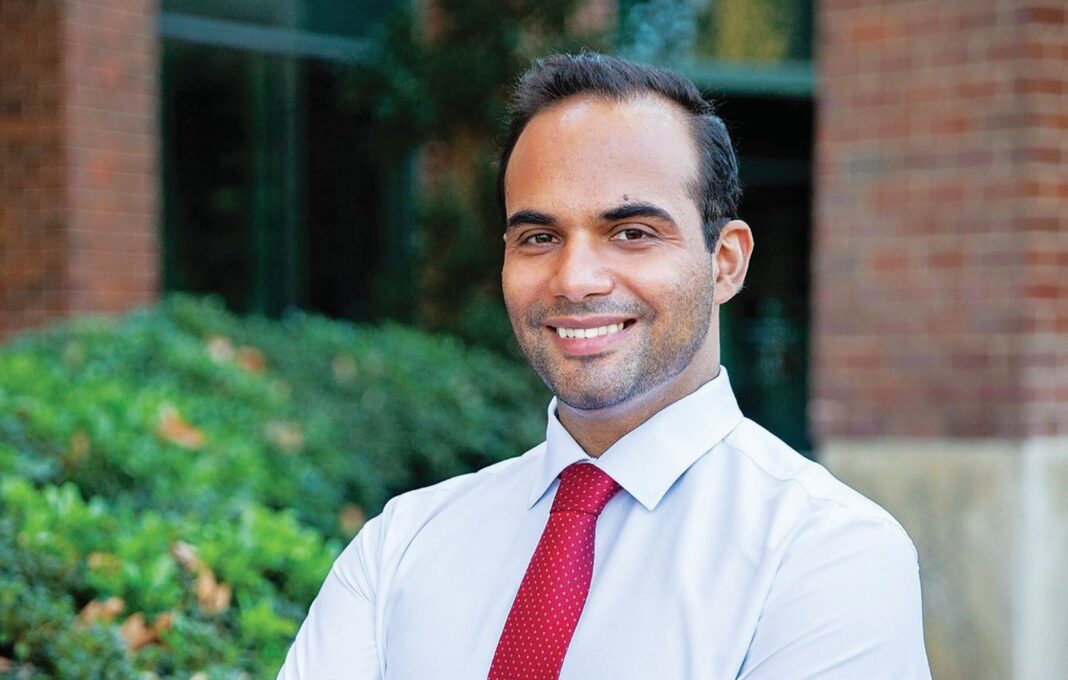
The Greek-American former adviser to President Donald Trump speaks to Dimokratia about developments in the Middle East, Ukraine, and his own political ambitions.
George Papadopoulos, a second-generation Greek-American from Thessaloniki, drew significant public attention when he went from being a foreign policy adviser to Donald Trump during the 2016 campaign to facing FBI charges for “making false statements regarding contacts with a Russian agent.”
At just 30 years old, Papadopoulos found himself at the center of allegations—promoted by the Democratic Party and circles close to the Clintons—about Russian interference in the 2016 election. These claims stemmed from a relatively harmless conversation with an Australian diplomat, during which he speculated that Russia might possess emails damaging to Hillary Clinton.
He spent 12 days in a U.S. federal prison, but the case was so weak that his sentence was reduced to probation and community service for one year. In 2020, he was fully pardoned by President Donald Trump.
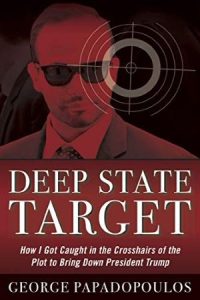
During this period, he wrote the book “Deep State Target: How I Got Caught in the Crosshairs of the Plot to Bring Down President Trump.” Throughout his public life, he has consistently supported Greek positions against Turkey.
Today, Papadopoulos remains close to the American president, though without an official political role. He works as a political commentator on the conservative platform Newsmax and runs his own YouTube channel. There is speculation about a possible run for the U.S. House of Representatives, but in this wide-ranging interview he avoids revealing his plans, noting only that politics remains his passion.
Q: You are visiting Greece after a long time, as a guest of Republicans Overseas.
Papadopoulos: Yes, my visit is to assume the role of deputy chairman of the organization, which represents Greek-American Republicans both in Greece and the U.S. Together with President Jonathan Konstantinou, we will meet officials in Cyprus and Greece to promote national issues, and we will conclude with a pilgrimage to Mount Athos after visiting Ioannina and Thessaloniki.
Q: What is your view on the “Epic Wrath” operation in Iran?
Papadopoulos: The Iranian regime has prepared for this conflict for decades. It is a deeply entrenched system that funds and arms terrorist groups. A nuclear-capable Iran was never going to be allowed. The leadership has already been eliminated, and its capabilities have been reduced. However, tensions in the Strait of Hormuz have made alternative energy routes—such as those involving Greece, Cyprus, and the U.S.—more attractive.
Q: What role can Greece play in the Middle East?
Papadopoulos: While working at the Hudson Institute (2011–2015), I organized the first trilateral conference between Greece, Cyprus, and Israel. Israel is important in countering Turkey, but Egypt is equally significant. Turkey has threatened the region for years. Greece should maintain strong ties with both Israel and Egypt.
Q: On Ukraine—do you believe Europe exaggerates the Russian threat?
Papadopoulos: If Donald Trump had been elected in 2020, the war in Ukraine would never have happened. Russia is a major European power that will eventually reintegrate into the global economy. Greece should not compete with Russia but instead help open a new chapter with Moscow. Greece has the unique ability to maintain relations with the U.S., Arabs, Israelis, Russians, and Ukrainians simultaneously.
Q: Who is behind the hostility toward Russia?
Papadopoulos: I was the target of a smear campaign, like President Trump. There is now an active criminal investigation into former President Obama and intelligence officials. Some U.S. and foreign actors wanted permanent conflict with Russia. Dividing the Orthodox Church is also part of this effort, which is not in Greece’s interest.
Q: What about Germany’s rearmament and Europe’s defense?
Papadopoulos: Europe must invest more in its own defense. Greece is a good example—it understands that sovereignty ultimately depends on its own military strength.
Q: What threatens Europe today?
Papadopoulos: Europe faces threats from open-border migration policies and from centralized policies imposed by Brussels that undermine national sovereignty. Greece and Germany are not the same country, and Brussels should not dictate their laws or budgets.
Q: How do you see U.S.–Greece relations?
Papadopoulos: Initially, the Mitsotakis government relied too much on the American Left, which hurt relations with Trump. That has been corrected, and relations are now at a historic high. Ties with the Republican Party are crucial for the future.
Q: Can the U.S. ambassador help strengthen ties?
Papadopoulos: Ambassador Guilfoyle is doing an excellent job. The results speak for themselves.
Q: What about Greece–Turkey relations?
Papadopoulos: The Turks view appeasement as weakness. Greece’s natural resources and sovereign rights should never be negotiated. If necessary, the military—along with allies—should respond to Turkish threats.
Q: On Syria and the rise of Abu Jolani?
Papadopoulos: The West appears to have influence over him. Europe must secure influence in Syria before Turkey turns it into a full colony.
Q: Will you return to politics?
Papadopoulos: I have been active in Republican politics for 15 years, including presidential campaigns and now as a commentator at Newsmax. Politics is my passion, and strengthening U.S.–Greece relations is a priority. I am still young, and if the right opportunity arises, I will consider all options.